
Before and After
Rescue Dog Transformations That Change Both Ends of the Leash
Jeff Davis | https://rescuedogcentral.com
 0
0 0
0 0
0 0
0 0
0
A rescue dog’s before and after story is never just about looks. Folks love a dramatic photo comparison, and I understand why. A dog that once stood with ribs showing, eyes dull, tail tucked, and coat rough as old broom straw can, a few months later, look like a different creature entirely. But the real transformation runs deeper than weight gain or a shiny coat. It shows up in the way that dog watches your hands, the way it sleeps, the way it chooses to trust, and the way it learns that not every door opens to hardship.
For anyone looking into a companion dog, therapy dog, or even a future service dog, rescue dog transformations are worth understanding from the inside out. The change can be remarkable, but it is not magic. It is patient work, consistency, and a steady kind of faith that the dog in front of you can become more than its past.
What a Rescue Dog Looks Like “Before”
When people picture a rescue dog before adoption, they often imagine the worst cases first. Some arrive thin, scarred, dirty, and frightened. Others come in looking fairly healthy but carrying the kind of emotional wear that does not show in a photograph. I have seen dogs that would not make eye contact, dogs that spun in circles from kennel stress, dogs that flattened themselves to the ground when a boot scraped the floor, and dogs that treated a simple touch like a threat. Those are the stories you do not forget.
Still, “before” is not always obvious. A dog can be fed and still be neglected. A dog can be friendly and still be deeply insecure. A dog can survive and yet never have learned how to settle in a home, walk through a doorway without worry, or rest without one ear cocked for trouble. That matters a great deal if you are hoping for a dog that may one day serve as a calm companion, visit hospitals as a therapy dog, or train toward service work. The before picture includes history, temperament, resilience, and the dog’s ability to recover from stress.
The Hidden Side of the Before Story
Out in the field, you learn to read what animals do not say outright. Dogs are no different. One rescue may wag through everything and still panic when left alone. Another may seem shut down for weeks, then bloom all at once after realizing food will come again tomorrow. The hidden side of a rescue dog’s past often reveals itself slowly. That is why early expectations need to be realistic. Some transformations come fast. Others come by inches.
For prospective owners, especially those interested in therapy dog or service dog potential, it helps to see the dog as an individual instead of a project. Rescue can absolutely produce exceptional dogs, but not every rescued animal is suited for every role. A fine companion dog may never enjoy the pressure of public work. A dog with a difficult past may become deeply devoted at home but remain too environmentally sensitive for therapy settings. Knowing that does not lessen the success. It simply honors the dog for what it truly is.
What Happens in the “After” Stage
The after stage begins long before the dog looks transformed in photos. It starts when the dog learns a routine. Morning meal. Evening walk. A bed that stays put. A voice that does not thunder. A hand that means guidance instead of force. Those ordinary moments do more healing than people realize. Dogs are creatures of pattern, and a safe pattern can rebuild a nervous system that has lived too long on alert.
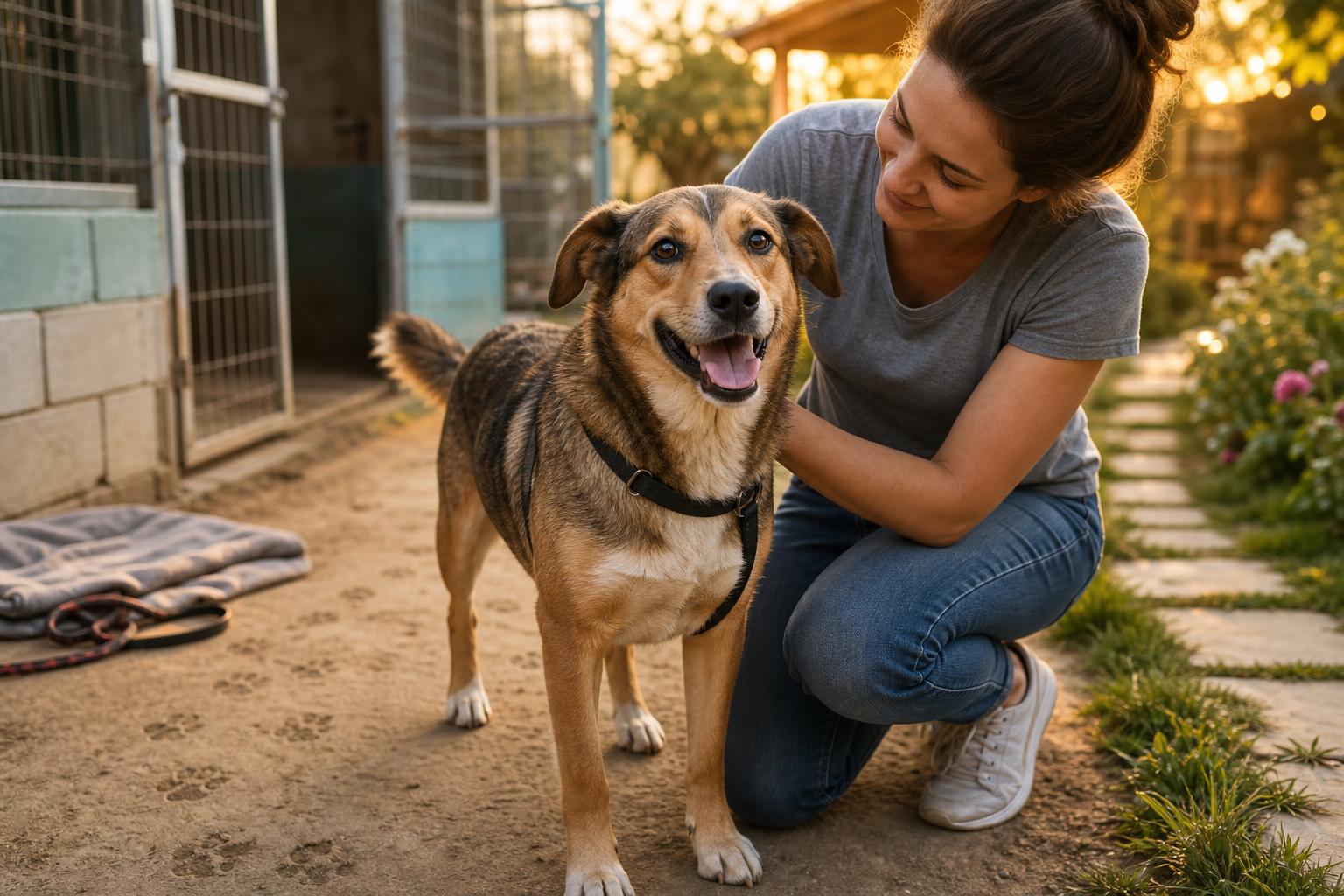
Then come the visible changes. The coat softens. The muscles fill in. The eyes brighten. The tail lifts more often. A dog that once hugged the walls may drift into the center of the room and lie down with a sigh. That sigh is worth more than a hundred social media captions. It means the dog is starting to rest for real.
Behavior changes can be even more striking. I have seen dogs that once barked at every moving thing grow into steady porch companions. I have seen former strays learn the quiet art of staying close without clinging. I have seen frightened dogs become the very animals that children read beside, seniors stroke, and families lean on after hard days. Some rescues reveal a softness that was always there, buried under survival. Once they feel safe, that nature rises to the top.
Trust Is the Real Transformation
If you ask me what marks the true before and after rescue dog transformation, I will tell you it is trust. Trust is the first clean look over the shoulder instead of a flinch. Trust is taking a treat with a loose mouth. Trust is choosing to follow you from room to room. Trust is letting out a deep sleep bark while sprawled belly-up in the living room, because the dog finally believes nobody is coming to hurt it.
That trust changes the owner too. A rescue dog has a way of teaching patience better than any book can. You learn to notice the small wins. The first relaxed walk. The first play bow. The first time thunder rolls and the dog comes to you instead of trying to disappear. Those moments stay with a person.
Can Rescue Dogs Become Therapy, Service, or Outstanding Companion Dogs?
The short answer is yes, some absolutely can. I have known rescued dogs that developed into first-rate companion dogs, steadying households with quiet loyalty and good sense. I have also seen select rescues do well in therapy work when their temperament, health, and training lined up right. A sound rescue dog with stable nerves, sociability, and a genuine ease around people can become a blessing in schools, hospitals, and care facilities.
Service dog work, though, asks for a very high standard. The dog must tolerate public environments, distractions, handling, and stress without coming unraveled. It must also have the drive, health, and temperament for specialized tasks. A rescued dog can meet that mark, but it is less about a heartwarming story and more about careful evaluation. Folks do the dog no favor by forcing a role it is not built for. The best outcome is the one that fits the dog honestly.
For most families, the greatest gift of a rescue transformation is a dependable companion dog. That is no small thing. A dog that can settle beside you through grief, greet visitors with good manners, and ride along on ordinary errands has already changed a life.
What Makes a Rescue Dog Thrive
From what I have seen, thriving usually comes down to a few steady ingredients working together. Good veterinary care matters. So does proper nutrition. Training matters too, but not the loud, heavy-handed sort. Rescue dogs often respond best to patient structure, fair correction, and clear expectations. They need room to learn without being rushed into more than they can handle.
The home itself matters just as much. A calm household can bring a wary dog around faster than folks expect. On the other hand, a chaotic environment can keep a dog stuck in survival mode. If the goal is a future therapy dog or service prospect, early socialization and measured exposure are essential. The dog must learn that the world is broad, manageable, and not full of traps.
The Story Behind the Photos
There is a temptation online to make rescue dog transformations look tidy. Before: broken. After: fixed. But that is not the whole truth. Some rescue dogs never become easy dogs, and yet they become deeply loved dogs. Some keep quirks, fears, or old reflexes for life. A dog may still dislike crowded spaces, still need management around certain triggers, or still carry a scar in mind or body. Transformation does not always mean perfection. Sometimes it means the dog can finally live in peace.
I remember one hound mix that came in lean and watchful, the kind of dog that looked like he had spent too many nights fending for himself. He would not eat if someone stood nearby, and every new sound sent him scanning the horizon. Months later, he had weight on him, a warm spot by the door, and a habit of carrying one worn toy around like a prize. He never did become a social butterfly. But he became steady, affectionate, and true. To the family that took him in, that dog was a masterpiece of transformation.
That is the part people should hold onto. Rescue is not about polishing a dog into somebody else’s ideal. It is about bringing that dog to a place where its best nature can finally stand up in daylight.
What Future Owners Should Know
If you are considering adopting and hope for a companion dog, therapy dog, or service dog candidate, go in with both hope and clear eyes. Ask questions about temperament, history, health, and behavior in different settings. Spend time with the dog when possible. Watch how it recovers from surprise, how it handles touch, whether it seeks connection, and whether it can settle. Those signs tell you more than a sad backstory ever will.
Then give the dog time. Real rescue dog transformations are built day by day. The before picture may be painful. The after picture may be beautiful. But the true story lives in the middle, in all those ordinary days when trust is fed, habits are shaped, and a once-uncertain dog learns where home is.
In my experience, there are few finer things than seeing a rescue dog come into itself. Not because it makes for a pretty comparison, but because it proves something sturdy and old-fashioned: with the right handling, a safe place, and time enough to heal, a good dog can still rise. And when that happens, both ends of the leash are changed for the better.
For anyone looking into a companion dog, therapy dog, or even a future service dog, rescue dog transformations are worth understanding from the inside out. The change can be remarkable, but it is not magic. It is patient work, consistency, and a steady kind of faith that the dog in front of you can become more than its past.
What a Rescue Dog Looks Like “Before”
When people picture a rescue dog before adoption, they often imagine the worst cases first. Some arrive thin, scarred, dirty, and frightened. Others come in looking fairly healthy but carrying the kind of emotional wear that does not show in a photograph. I have seen dogs that would not make eye contact, dogs that spun in circles from kennel stress, dogs that flattened themselves to the ground when a boot scraped the floor, and dogs that treated a simple touch like a threat. Those are the stories you do not forget.
Still, “before” is not always obvious. A dog can be fed and still be neglected. A dog can be friendly and still be deeply insecure. A dog can survive and yet never have learned how to settle in a home, walk through a doorway without worry, or rest without one ear cocked for trouble. That matters a great deal if you are hoping for a dog that may one day serve as a calm companion, visit hospitals as a therapy dog, or train toward service work. The before picture includes history, temperament, resilience, and the dog’s ability to recover from stress.
The Hidden Side of the Before Story
Out in the field, you learn to read what animals do not say outright. Dogs are no different. One rescue may wag through everything and still panic when left alone. Another may seem shut down for weeks, then bloom all at once after realizing food will come again tomorrow. The hidden side of a rescue dog’s past often reveals itself slowly. That is why early expectations need to be realistic. Some transformations come fast. Others come by inches.
For prospective owners, especially those interested in therapy dog or service dog potential, it helps to see the dog as an individual instead of a project. Rescue can absolutely produce exceptional dogs, but not every rescued animal is suited for every role. A fine companion dog may never enjoy the pressure of public work. A dog with a difficult past may become deeply devoted at home but remain too environmentally sensitive for therapy settings. Knowing that does not lessen the success. It simply honors the dog for what it truly is.
What Happens in the “After” Stage
The after stage begins long before the dog looks transformed in photos. It starts when the dog learns a routine. Morning meal. Evening walk. A bed that stays put. A voice that does not thunder. A hand that means guidance instead of force. Those ordinary moments do more healing than people realize. Dogs are creatures of pattern, and a safe pattern can rebuild a nervous system that has lived too long on alert.
Then come the visible changes. The coat softens. The muscles fill in. The eyes brighten. The tail lifts more often. A dog that once hugged the walls may drift into the center of the room and lie down with a sigh. That sigh is worth more than a hundred social media captions. It means the dog is starting to rest for real.
Behavior changes can be even more striking. I have seen dogs that once barked at every moving thing grow into steady porch companions. I have seen former strays learn the quiet art of staying close without clinging. I have seen frightened dogs become the very animals that children read beside, seniors stroke, and families lean on after hard days. Some rescues reveal a softness that was always there, buried under survival. Once they feel safe, that nature rises to the top.
Trust Is the Real Transformation
If you ask me what marks the true before and after rescue dog transformation, I will tell you it is trust. Trust is the first clean look over the shoulder instead of a flinch. Trust is taking a treat with a loose mouth. Trust is choosing to follow you from room to room. Trust is letting out a deep sleep bark while sprawled belly-up in the living room, because the dog finally believes nobody is coming to hurt it.
That trust changes the owner too. A rescue dog has a way of teaching patience better than any book can. You learn to notice the small wins. The first relaxed walk. The first play bow. The first time thunder rolls and the dog comes to you instead of trying to disappear. Those moments stay with a person.
Can Rescue Dogs Become Therapy, Service, or Outstanding Companion Dogs?
The short answer is yes, some absolutely can. I have known rescued dogs that developed into first-rate companion dogs, steadying households with quiet loyalty and good sense. I have also seen select rescues do well in therapy work when their temperament, health, and training lined up right. A sound rescue dog with stable nerves, sociability, and a genuine ease around people can become a blessing in schools, hospitals, and care facilities.
Service dog work, though, asks for a very high standard. The dog must tolerate public environments, distractions, handling, and stress without coming unraveled. It must also have the drive, health, and temperament for specialized tasks. A rescued dog can meet that mark, but it is less about a heartwarming story and more about careful evaluation. Folks do the dog no favor by forcing a role it is not built for. The best outcome is the one that fits the dog honestly.
For most families, the greatest gift of a rescue transformation is a dependable companion dog. That is no small thing. A dog that can settle beside you through grief, greet visitors with good manners, and ride along on ordinary errands has already changed a life.
What Makes a Rescue Dog Thrive
From what I have seen, thriving usually comes down to a few steady ingredients working together. Good veterinary care matters. So does proper nutrition. Training matters too, but not the loud, heavy-handed sort. Rescue dogs often respond best to patient structure, fair correction, and clear expectations. They need room to learn without being rushed into more than they can handle.
The home itself matters just as much. A calm household can bring a wary dog around faster than folks expect. On the other hand, a chaotic environment can keep a dog stuck in survival mode. If the goal is a future therapy dog or service prospect, early socialization and measured exposure are essential. The dog must learn that the world is broad, manageable, and not full of traps.
The Story Behind the Photos
There is a temptation online to make rescue dog transformations look tidy. Before: broken. After: fixed. But that is not the whole truth. Some rescue dogs never become easy dogs, and yet they become deeply loved dogs. Some keep quirks, fears, or old reflexes for life. A dog may still dislike crowded spaces, still need management around certain triggers, or still carry a scar in mind or body. Transformation does not always mean perfection. Sometimes it means the dog can finally live in peace.
I remember one hound mix that came in lean and watchful, the kind of dog that looked like he had spent too many nights fending for himself. He would not eat if someone stood nearby, and every new sound sent him scanning the horizon. Months later, he had weight on him, a warm spot by the door, and a habit of carrying one worn toy around like a prize. He never did become a social butterfly. But he became steady, affectionate, and true. To the family that took him in, that dog was a masterpiece of transformation.
That is the part people should hold onto. Rescue is not about polishing a dog into somebody else’s ideal. It is about bringing that dog to a place where its best nature can finally stand up in daylight.
What Future Owners Should Know
If you are considering adopting and hope for a companion dog, therapy dog, or service dog candidate, go in with both hope and clear eyes. Ask questions about temperament, history, health, and behavior in different settings. Spend time with the dog when possible. Watch how it recovers from surprise, how it handles touch, whether it seeks connection, and whether it can settle. Those signs tell you more than a sad backstory ever will.
Then give the dog time. Real rescue dog transformations are built day by day. The before picture may be painful. The after picture may be beautiful. But the true story lives in the middle, in all those ordinary days when trust is fed, habits are shaped, and a once-uncertain dog learns where home is.
In my experience, there are few finer things than seeing a rescue dog come into itself. Not because it makes for a pretty comparison, but because it proves something sturdy and old-fashioned: with the right handling, a safe place, and time enough to heal, a good dog can still rise. And when that happens, both ends of the leash are changed for the better.



View all 0 comments