
How to Transition a Dog to Its New Home Successfully
Jeff Davis | https://rescuedogcentral.com
 0
0 0
0 0
0 0
0 0
0
Bringing a new dog home can feel a lot like stepping into the woods before daylight. The air is full of promise, but if you rush in too loud and too fast, you can ruin the whole start. Dogs are much the same. Whether you are welcoming a companion dog, a therapy dog prospect, or a service dog in training, the first stretch in a new home matters more than most people realize. A dog that is guided with patience, routine, and plain old common sense will usually settle better, trust faster, and build stronger habits.
I have seen dogs come in from shelters, breeders, foster homes, and working programs, and no two transitions are exactly alike. Some step through the front door, sniff twice, and act like they have always belonged there. Others carry tension in their shoulders, pace the floors, skip meals, or cling to one corner like they are waiting for the world to settle down. That is normal. A new home, no matter how loving, is still unfamiliar territory. New smells, new people, new rules, new sounds, and a new rhythm can leave even a steady-nerved dog off balance for a while.
If you want to transition a dog to its new home successfully, your job is not to overwhelm the dog with affection, freedom, and excitement. Your job is to give that dog a safe landing. Calm structure beats chaos every single time.
Start With a Quiet, Controlled Introduction
The first hours in a new home should be simple. Do not invite a crowd over. Do not turn it into a celebration with constant handling and noise. Think of it like easing a young hunting dog into a new field. You do not fire a shotgun over its head before it understands the ground under its feet. You let it take in the place, get its bearings, and learn that nothing bad is coming next.
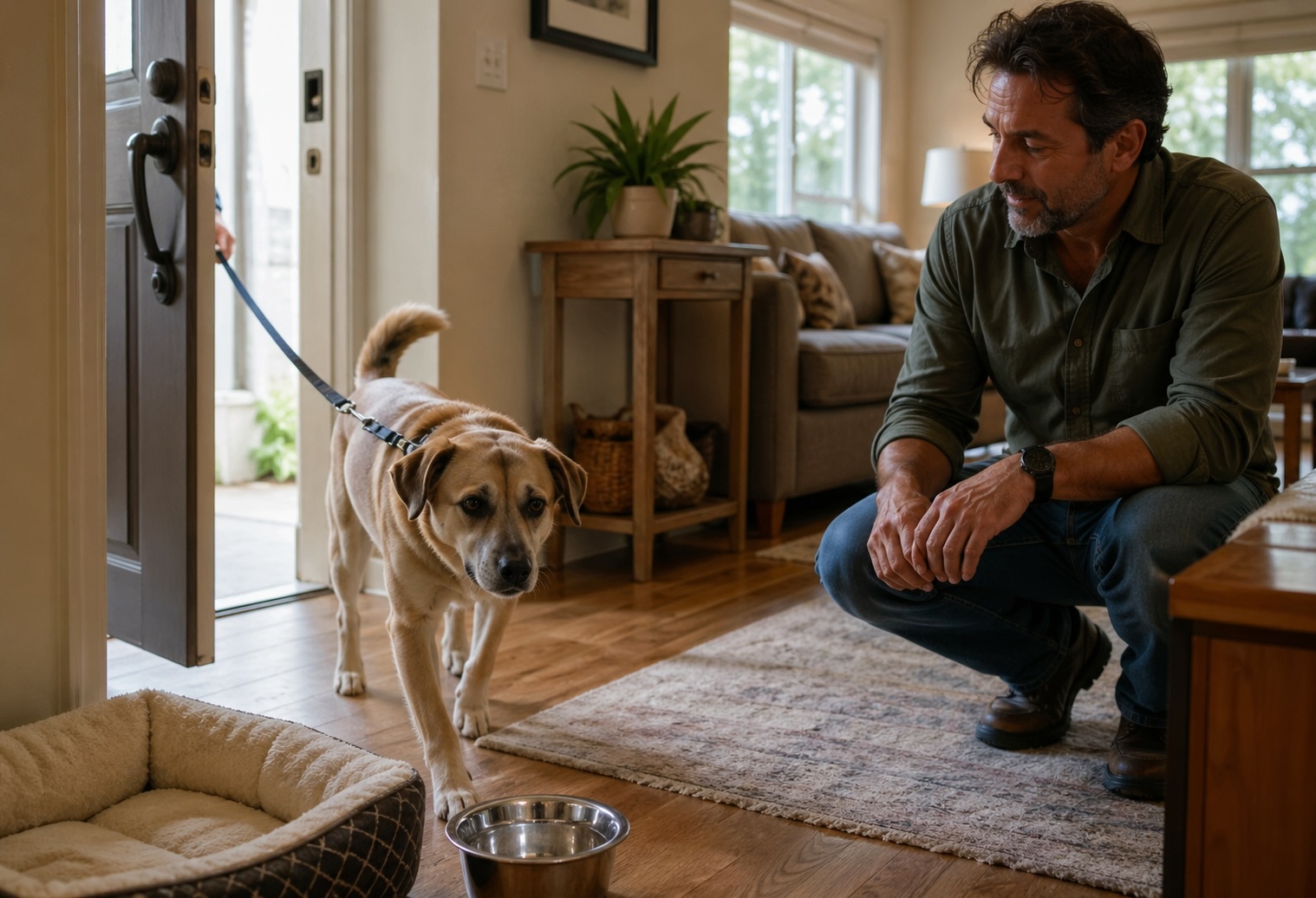
When your dog first arrives, walk it on leash through the main areas of the home. Let it sniff. Let it observe. Keep your own energy level low and steady. If the dog seems nervous, speak softly and move slowly. If the dog seems excited, resist the urge to match that energy. The dog needs you to be an anchor, not another wave in the water.
Set up a designated resting space right away. That can be a crate, a dog bed in a quiet room, or another contained area where the dog can decompress. For many dogs, especially those with therapy or service dog potential, having a consistent safe place lowers stress and helps them learn the household faster. A dog cannot absorb new expectations when its mind is still busy scanning for threats.
Why the First 72 Hours Matter
The first three days often tell you less about the dog's true personality than people think. Some dogs shut down. Others act overly bold because they are running on adrenaline. Appetite may dip. Sleep may be restless. House training may look worse than it really is. This does not mean the dog is a poor fit. It means the dog is adjusting.
During this period, keep life plain. Short potty walks, calm feeding times, rest, and a little gentle connection go a long way. Avoid dog parks, crowded stores, and long social outings. Even a dog bred or trained for public-facing work needs time to settle before being asked to navigate a busy world.
Build Trust Through Routine
If there is one thing dogs understand deeply, it is pattern. A dependable schedule helps a dog relax because it teaches the dog what comes next. Meals happen at about the same time. Potty breaks are regular. Rest periods are protected. Walks are expected. Training is brief and clear. That kind of consistency is worth more than expensive gear and fancy advice.
For companion dogs, routine creates comfort. For therapy dogs, it lays the groundwork for emotional steadiness. For service dogs, it becomes part of the discipline required for reliable work. Dogs thrive when the world around them makes sense.
Feed a quality diet on schedule and keep fresh water available. Take the dog out first thing in the morning, after meals, after naps, and before bed. If house training is still uncertain, tighten the schedule and supervise closely. Every successful potty trip outside builds understanding. Every preventable accident indoors muddies the lesson.
Sleep matters too. Some new owners unknowingly exhaust dogs by keeping them engaged all day long. A dog that is tired in the wrong way can become mouthy, jumpy, or unsettled. Give the dog room to rest without being constantly touched or talked to. Settling down is part of the learning process.
Set Clear Boundaries From Day One
Kindness and softness are not the same thing as a lack of rules. In fact, dogs generally do better when expectations are clear early on. If the dog is not going to be allowed on the furniture long term, do not make an exception on the first night because it feels heartwarming. If door manners matter, start teaching them at the beginning. If you want calm leash behavior, do not rehearse pulling for two weeks and then suddenly demand precision.
Dogs learn what works. That simple truth saves a lot of frustration. Reward the behavior you want. Interrupt and redirect what you do not want. Keep your corrections fair, your timing clean, and your standards realistic. A nervous rehomed dog may need more reassurance. An overconfident adolescent dog may need firmer structure. Either way, mixed signals slow progress.
This is especially important for future therapy or service dogs. Their world depends on consistency. The dog should learn that calm behavior opens doors, earns praise, and leads to good things. That lesson starts in the home long before it ever carries into public work.
Managing Introductions to Family Members and Other Pets
If children are in the home, coach them before the dog arrives. A new dog should not be hugged, climbed on, cornered, or treated like a stuffed toy that finally came to life. Respect is part of safety. Let the dog approach on its own terms, and supervise all interactions carefully.
If there are other pets, introductions should be thoughtful and measured. Neutral ground helps when possible, especially with resident dogs. Keep meetings short and calm. Do not force togetherness. Some dogs become fast friends, while others need time and management before trust grows. Separate feeding areas, separate rest spaces, and controlled interactions can prevent small tensions from turning into real conflict.
Use Training to Create Connection
Training is not just about obedience. It is one of the fastest ways to build communication between you and your dog. A few minutes at a time, once or twice a day, can help a new dog understand your voice, your timing, and your expectations. Start with simple behaviors like name recognition, come, sit, down, leash walking, and place. Keep sessions short enough that the dog stays engaged.
I have always liked the plain usefulness of everyday training. A dog that learns to wait at a threshold, settle on a mat, and check in with its handler is easier to live with and safer in the world. For therapy dogs and service dogs, those basics become the roots of advanced reliability. For companion dogs, they make daily life smoother and more peaceful.
Use food rewards, praise, and real-world rewards such as going outside or greeting a person when the dog offers calm behavior. Training should feel like guidance, not a wrestling match. A dog that trusts your leadership will usually give you more in the long run than a dog that is merely pressured into compliance.
Read the Dog in Front of You
One mistake people make when transitioning a dog to a new home is assuming every dog should follow the same timeline. That is just not how dogs work. A bold young retriever may settle in quickly. A sensitive rescue with an unknown past may take weeks before its true nature shows. A highly trained service dog may adapt to the environment but still need time to bond with a new handler. You have to read what is in front of you, not what you hoped for in your head.
Watch body language. A soft face, loose movement, normal appetite, healthy curiosity, and restful sleep all point in the right direction. On the other hand, tucked posture, whale eye, constant panting, refusal to eat, hiding, or escalating reactivity mean the dog needs more support and less pressure. There is no shame in slowing down. In my experience, patience early prevents bigger problems later.
When to Seek Professional Help
If your dog shows persistent fear, aggression, severe separation distress, or extreme inability to settle, it is wise to involve a qualified trainer or behavior professional sooner rather than later. This is not a sign of failure. It is sound judgment. The right help can keep a manageable issue from turning into a dangerous habit.
That is particularly true if the dog is being considered for therapy work or service work. Stability, confidence, and adaptability are not optional in those roles. Early evaluation and thoughtful training plans make a world of difference.
Give the Bond Time to Grow
Some of the best dogs I have ever known did not show their whole heart in the first week. Trust is often earned in quiet moments: the third morning when the dog finally eats a full breakfast, the evening it chooses your feet instead of the far corner, the first time it looks up on a walk as if to ask what comes next. Those little shifts matter. They are how a stranger becomes your dog.
Do not measure success only by instant affection or flashy obedience. A successful transition means the dog feels safe, understands the routine, and starts to believe that your home is truly home. That is the kind of foundation that supports everything else, whether you want a faithful companion by the couch, a gentle therapy dog visiting people in need, or a steady service dog capable of serious work.
In the end, transitioning a dog to a new home successfully comes down to calm leadership, clear routines, and enough patience to let the dog unfold at its own pace. Keep the start quiet. Keep the rules fair. Keep your eyes open. Dogs notice more than we give them credit for, and when they learn that your home is safe and your guidance is dependable, they usually meet you more than halfway.
A good dog does not need a perfect beginning. It needs a steady hand, a settled place, and someone willing to do right by it day after day. That is how trust is built. That is how a new home becomes the right home.
I have seen dogs come in from shelters, breeders, foster homes, and working programs, and no two transitions are exactly alike. Some step through the front door, sniff twice, and act like they have always belonged there. Others carry tension in their shoulders, pace the floors, skip meals, or cling to one corner like they are waiting for the world to settle down. That is normal. A new home, no matter how loving, is still unfamiliar territory. New smells, new people, new rules, new sounds, and a new rhythm can leave even a steady-nerved dog off balance for a while.
If you want to transition a dog to its new home successfully, your job is not to overwhelm the dog with affection, freedom, and excitement. Your job is to give that dog a safe landing. Calm structure beats chaos every single time.
Start With a Quiet, Controlled Introduction
The first hours in a new home should be simple. Do not invite a crowd over. Do not turn it into a celebration with constant handling and noise. Think of it like easing a young hunting dog into a new field. You do not fire a shotgun over its head before it understands the ground under its feet. You let it take in the place, get its bearings, and learn that nothing bad is coming next.
When your dog first arrives, walk it on leash through the main areas of the home. Let it sniff. Let it observe. Keep your own energy level low and steady. If the dog seems nervous, speak softly and move slowly. If the dog seems excited, resist the urge to match that energy. The dog needs you to be an anchor, not another wave in the water.
Set up a designated resting space right away. That can be a crate, a dog bed in a quiet room, or another contained area where the dog can decompress. For many dogs, especially those with therapy or service dog potential, having a consistent safe place lowers stress and helps them learn the household faster. A dog cannot absorb new expectations when its mind is still busy scanning for threats.
Why the First 72 Hours Matter
The first three days often tell you less about the dog's true personality than people think. Some dogs shut down. Others act overly bold because they are running on adrenaline. Appetite may dip. Sleep may be restless. House training may look worse than it really is. This does not mean the dog is a poor fit. It means the dog is adjusting.
During this period, keep life plain. Short potty walks, calm feeding times, rest, and a little gentle connection go a long way. Avoid dog parks, crowded stores, and long social outings. Even a dog bred or trained for public-facing work needs time to settle before being asked to navigate a busy world.
Build Trust Through Routine
If there is one thing dogs understand deeply, it is pattern. A dependable schedule helps a dog relax because it teaches the dog what comes next. Meals happen at about the same time. Potty breaks are regular. Rest periods are protected. Walks are expected. Training is brief and clear. That kind of consistency is worth more than expensive gear and fancy advice.
For companion dogs, routine creates comfort. For therapy dogs, it lays the groundwork for emotional steadiness. For service dogs, it becomes part of the discipline required for reliable work. Dogs thrive when the world around them makes sense.
Feed a quality diet on schedule and keep fresh water available. Take the dog out first thing in the morning, after meals, after naps, and before bed. If house training is still uncertain, tighten the schedule and supervise closely. Every successful potty trip outside builds understanding. Every preventable accident indoors muddies the lesson.
Sleep matters too. Some new owners unknowingly exhaust dogs by keeping them engaged all day long. A dog that is tired in the wrong way can become mouthy, jumpy, or unsettled. Give the dog room to rest without being constantly touched or talked to. Settling down is part of the learning process.
Set Clear Boundaries From Day One
Kindness and softness are not the same thing as a lack of rules. In fact, dogs generally do better when expectations are clear early on. If the dog is not going to be allowed on the furniture long term, do not make an exception on the first night because it feels heartwarming. If door manners matter, start teaching them at the beginning. If you want calm leash behavior, do not rehearse pulling for two weeks and then suddenly demand precision.
Dogs learn what works. That simple truth saves a lot of frustration. Reward the behavior you want. Interrupt and redirect what you do not want. Keep your corrections fair, your timing clean, and your standards realistic. A nervous rehomed dog may need more reassurance. An overconfident adolescent dog may need firmer structure. Either way, mixed signals slow progress.
This is especially important for future therapy or service dogs. Their world depends on consistency. The dog should learn that calm behavior opens doors, earns praise, and leads to good things. That lesson starts in the home long before it ever carries into public work.
Managing Introductions to Family Members and Other Pets
If children are in the home, coach them before the dog arrives. A new dog should not be hugged, climbed on, cornered, or treated like a stuffed toy that finally came to life. Respect is part of safety. Let the dog approach on its own terms, and supervise all interactions carefully.
If there are other pets, introductions should be thoughtful and measured. Neutral ground helps when possible, especially with resident dogs. Keep meetings short and calm. Do not force togetherness. Some dogs become fast friends, while others need time and management before trust grows. Separate feeding areas, separate rest spaces, and controlled interactions can prevent small tensions from turning into real conflict.
Use Training to Create Connection
Training is not just about obedience. It is one of the fastest ways to build communication between you and your dog. A few minutes at a time, once or twice a day, can help a new dog understand your voice, your timing, and your expectations. Start with simple behaviors like name recognition, come, sit, down, leash walking, and place. Keep sessions short enough that the dog stays engaged.
I have always liked the plain usefulness of everyday training. A dog that learns to wait at a threshold, settle on a mat, and check in with its handler is easier to live with and safer in the world. For therapy dogs and service dogs, those basics become the roots of advanced reliability. For companion dogs, they make daily life smoother and more peaceful.
Use food rewards, praise, and real-world rewards such as going outside or greeting a person when the dog offers calm behavior. Training should feel like guidance, not a wrestling match. A dog that trusts your leadership will usually give you more in the long run than a dog that is merely pressured into compliance.
Read the Dog in Front of You
One mistake people make when transitioning a dog to a new home is assuming every dog should follow the same timeline. That is just not how dogs work. A bold young retriever may settle in quickly. A sensitive rescue with an unknown past may take weeks before its true nature shows. A highly trained service dog may adapt to the environment but still need time to bond with a new handler. You have to read what is in front of you, not what you hoped for in your head.
Watch body language. A soft face, loose movement, normal appetite, healthy curiosity, and restful sleep all point in the right direction. On the other hand, tucked posture, whale eye, constant panting, refusal to eat, hiding, or escalating reactivity mean the dog needs more support and less pressure. There is no shame in slowing down. In my experience, patience early prevents bigger problems later.
When to Seek Professional Help
If your dog shows persistent fear, aggression, severe separation distress, or extreme inability to settle, it is wise to involve a qualified trainer or behavior professional sooner rather than later. This is not a sign of failure. It is sound judgment. The right help can keep a manageable issue from turning into a dangerous habit.
That is particularly true if the dog is being considered for therapy work or service work. Stability, confidence, and adaptability are not optional in those roles. Early evaluation and thoughtful training plans make a world of difference.
Give the Bond Time to Grow
Some of the best dogs I have ever known did not show their whole heart in the first week. Trust is often earned in quiet moments: the third morning when the dog finally eats a full breakfast, the evening it chooses your feet instead of the far corner, the first time it looks up on a walk as if to ask what comes next. Those little shifts matter. They are how a stranger becomes your dog.
Do not measure success only by instant affection or flashy obedience. A successful transition means the dog feels safe, understands the routine, and starts to believe that your home is truly home. That is the kind of foundation that supports everything else, whether you want a faithful companion by the couch, a gentle therapy dog visiting people in need, or a steady service dog capable of serious work.
In the end, transitioning a dog to a new home successfully comes down to calm leadership, clear routines, and enough patience to let the dog unfold at its own pace. Keep the start quiet. Keep the rules fair. Keep your eyes open. Dogs notice more than we give them credit for, and when they learn that your home is safe and your guidance is dependable, they usually meet you more than halfway.
A good dog does not need a perfect beginning. It needs a steady hand, a settled place, and someone willing to do right by it day after day. That is how trust is built. That is how a new home becomes the right home.



View all 0 comments