Fearful Dogs
How to Build Confidence the Right Way
Jeff Davis | https://rescuedogcentral.com
 0
0 0
0 0
0 0
0 0
0
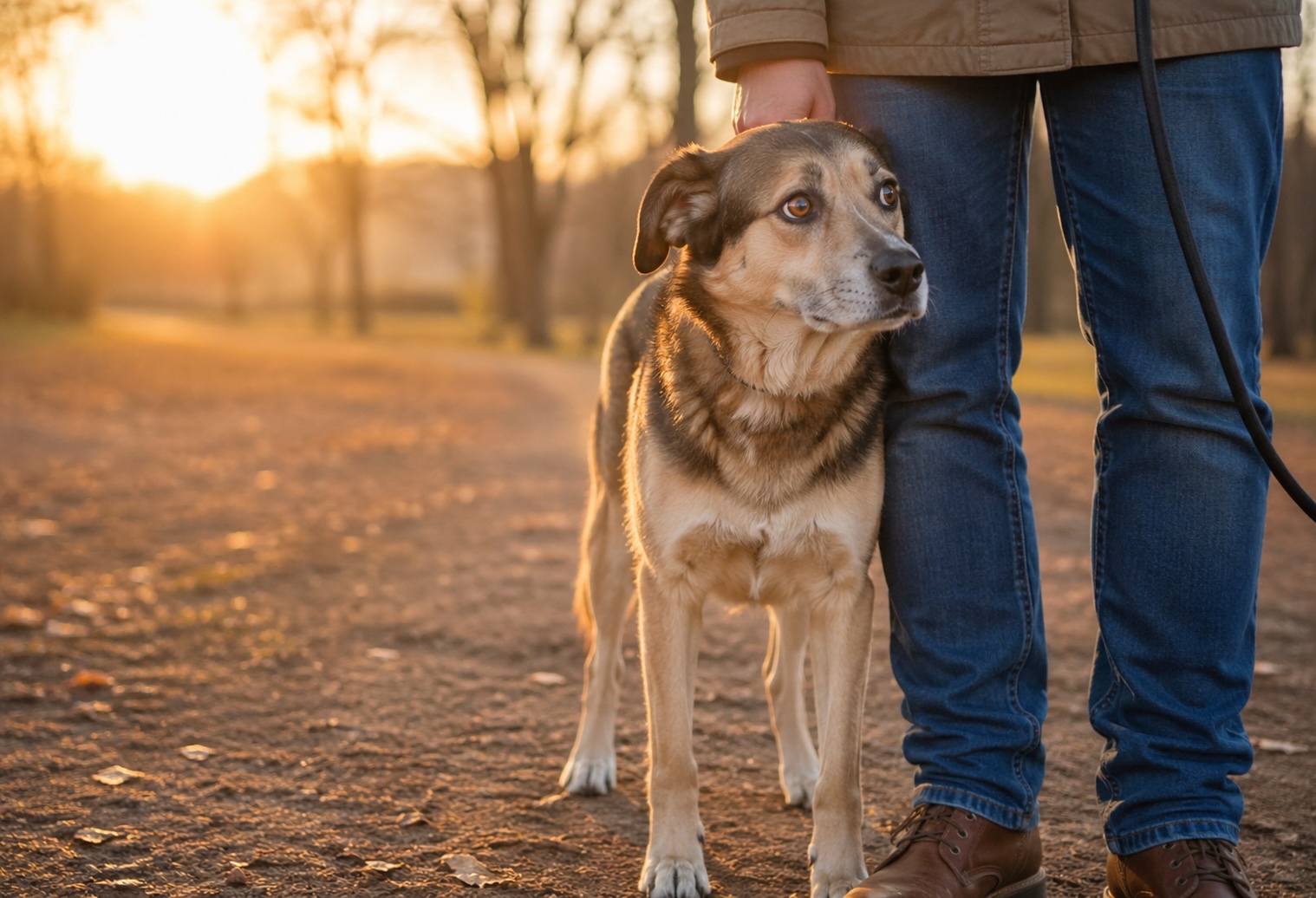
Some dogs come into your life bold as brass, tail high, nose working, ready to meet the whole world head-on. Others step in soft, eyes scanning, body tight, carrying worry like an old burr stuck deep in a hunting coat. If you've spent enough time around dogs, you learn real quick that fear is not stubbornness, and it sure isn't disobedience. A fearful dog is trying to stay safe the only way it knows how.
I've seen it in working country and quiet living rooms alike. A dog may flinch at a door shutting, freeze at the sight of a stranger, or refuse to cross a slick floor like it's a creek in flood. Folks often want a fast answer, but confidence is not something you hammer into a dog. It's something you build, layer by layer, until that dog starts believing the world is not out to swallow it whole.
For anyone raising a companion dog, evaluating a therapy dog prospect, or preparing a service dog in training, confidence matters. A dog does not need to be flashy or fearless, but it does need enough emotional steadiness to recover from uncertainty. That kind of steadiness grows from trust, timing, and a handler who pays attention.
What Fear Looks Like in Dogs
Fear does not always come dressed in obvious clothes. Sure, sometimes you get the tucked tail, the trembling body, the ears pinned hard back. But often it's quieter than that. A dog may sniff the ground to avoid pressure, turn its head away, lick its lips, yawn when not tired, or suddenly become very interested in anything except the thing that worries it. Some bark and lunge because distance feels safer than contact. Others go still as a fence post. That stillness can fool people, but a shut-down dog is not a calm dog.
When I look at a fearful dog, I'm not asking, "How do I stop this behavior?" I'm asking, "What is this dog telling me?" That shift matters. Behavior is the smoke. Emotion is the fire. If you only swat at the smoke, you never solve the real problem.
Why Some Dogs Struggle More Than Others
There are a few roads that lead to fear. Genetics play a role. Early socialization matters more than many people realize. A bad experience can leave a lasting mark. So can a string of little experiences that felt overwhelming at the time. Sometimes the dog simply missed key exposure during puppyhood and reaches adulthood with a narrow idea of what feels safe.
That matters especially for therapy dogs and service dogs. These dogs are asked to work in human-centered environments full of odd sounds, moving equipment, strangers, and unpredictable spaces. If a dog is naturally more cautious, that does not mean it has no future. It means the training plan must respect temperament instead of bulldozing through it.
Start with Safety and Trust
If you want to build confidence in a fearful dog, your first job is to become safe ground. A dog that trusts you can borrow courage from you. A dog that fears being corrected, cornered, or pushed too hard cannot learn well. That doesn't mean you coddle every uncertain moment. It means you handle the dog with fairness and steadiness.
Keep your routine predictable. Feed on time. Walk on time. Rest on time. Use a calm voice. Let the dog learn that life with you has shape and order. Fearful dogs often bloom when the world stops feeling random. Predictability lowers stress, and lower stress opens the door to learning.
I'm also a firm believer in giving a dog room to think. If a dog hesitates at a new object, I don't drag it in. I let it look, sniff, and process. Pressure can create compliance in the moment, but it often deepens fear underneath. Trust grows when the dog learns you will guide without overwhelming.
Build Confidence Through Small Wins
A good dog trainer learns to break the mountain down into foothills. Fearful dogs do best when tasks are made small enough that success comes often. If a dog is afraid of strangers, don't begin with a busy store and a dozen reaching hands. Start with one quiet person at a distance where the dog can notice them without falling apart. If slick floors cause panic, don't march the dog into a bright lobby. Begin with a mat, then a slightly smoother surface, then a short stretch of flooring with plenty of reward and retreat.
That retreat part is important. Confidence is not built by trapping a dog until it "gets over it." Real confidence comes when the dog can approach, investigate, and move away without punishment. Given enough patient repetition, the dog starts choosing to move forward on its own. That choice is where growth happens.
Reward the Brave Moments
You don't have to wait for perfection. Reward the glance, the step forward, the loose breath, the curious sniff. Mark the effort. Let the dog know that trying pays. Food works well for many dogs, especially high-value treats in difficult settings. Play can work too, if the dog is able to stay playful under stress. Praise has value when it is sincere and calm, not overbearing.
I've watched worried dogs change simply because somebody finally noticed the small good moments instead of obsessing over the bad ones. A dog that once planted its feet outside a clinic door may one day step in, take a treat, and look back at you with a little spark in its eye. That spark is worth protecting.
Use Exposure, Not Flooding
There's a world of difference between gentle exposure and too much, too soon. Proper exposure means the dog experiences the trigger at a level it can handle while pairing that experience with safety and reward. Flooding means the dog is overwhelmed and unable to cope. One builds resilience. The other can make fear sink deeper.
If your dog fears crowds, start at the edge of activity, not in the thick of it. If elevators are a problem, let the dog hear and see them from across the hall before expecting it to ride. For future therapy dogs and service dogs, these public access skills need to be taught with care. Stability comes from repetition under threshold, not from throwing the dog into the deep end and hoping instinct takes over.
Watch Recovery Time
One thing experienced handlers pay attention to is recovery. A confident dog may startle, then settle. A fearful dog may remain wound tight long after the event is over. That recovery window tells you a lot. If the dog is not bouncing back, the session was too hard. Short, successful outings beat long, stressful ones every time.
The Role of Obedience in Confidence
Basic training can help fearful dogs, but only if it is used as a support, not a shield. Cues like sit, touch, place, and heel give the dog familiar tasks in unfamiliar places. That familiarity can steady the mind. Still, obedience is not a cure-all. You can have a dog that sits beautifully while quietly panicking inside. Don't confuse trained behavior with emotional comfort.
What I want is a dog that can respond and also breathe, observe, and recover. For companion dogs, this means better manners and a more peaceful home life. For therapy and service work, it means the dog can function around distraction without carrying hidden strain that will surface later.
Confidence Grows in the Body Too
Sometimes fear has a physical side people overlook. Dogs unsure of their footing, weak in coordination, or sensitive to surfaces often look emotionally timid when part of the issue is body awareness. Confidence work can include stepping over poles, climbing stable platforms, walking across different textures, or learning to balance through simple fitness exercises. When a dog learns what its body can do, the mind often follows.
I've seen a shy dog change after learning to navigate logs, low ramps, and uneven ground on quiet walks. Out in the field, a dog learns by doing. Not every fearful dog needs formal sport work, but many benefit from gentle challenges that teach control and capability. The trick is to keep those challenges achievable.
When Not to Push a Dog into Therapy or Service Work
This is the hard truth some people need to hear: not every nice dog is suited for therapy work, and not every intelligent dog is built for service work. Fearfulness does not make a dog bad, but chronic anxiety can make certain jobs unfair to ask of it. The goal should never be forcing a dog into a role for our sake. The goal is finding where that dog can thrive.
Some fearful dogs become wonderful companion dogs in calm homes. Some make steady progress and grow into reliable therapy or service candidates. Others improve greatly but remain too sensitive for demanding public work. That is not failure. That is honest handling.
Common Mistakes That Slow Progress
The biggest mistakes tend to come from impatience. People move too fast, ask for too much, or expose the dog to triggers without a plan. They let strangers crowd the dog because they want the dog to "socialize." They correct growling, which removes warning signs without changing the fear underneath. Or they offer constant soothing in a panicked tone, which can accidentally add tension to the moment.
Calm leadership is different from force, and compassion is different from pity. A fearful dog needs both kindness and structure. It needs a handler who can read the room, respect thresholds, and keep sessions practical.
How Confidence Takes Root Over Time
The best progress often arrives quietly. One day you realize the dog who used to flatten itself at every new noise now lifts its head, listens, and moves on. The dog who once hid behind your legs now greets a familiar visitor with a soft tail wag. The dog who could not enter a training building now walks through the door, checks in with you, and gets to work.
That kind of change rarely comes from one grand breakthrough. It comes from dozens of fair decisions made over weeks and months. It comes from protecting trust, rewarding effort, and understanding that brave does not always look dramatic. Sometimes brave is one step closer, one calmer breath, one choice to stay present.
If you're living with a fearful dog, don't measure progress against somebody else's bold, easy animal. Measure it against the dog you had yesterday. Build from there. Whether your dog's future is as a loyal companion, a gentle therapy dog, or a dependable service dog, confidence starts the same way: with patience, good sense, and a handler worth following.
I've seen it in working country and quiet living rooms alike. A dog may flinch at a door shutting, freeze at the sight of a stranger, or refuse to cross a slick floor like it's a creek in flood. Folks often want a fast answer, but confidence is not something you hammer into a dog. It's something you build, layer by layer, until that dog starts believing the world is not out to swallow it whole.
For anyone raising a companion dog, evaluating a therapy dog prospect, or preparing a service dog in training, confidence matters. A dog does not need to be flashy or fearless, but it does need enough emotional steadiness to recover from uncertainty. That kind of steadiness grows from trust, timing, and a handler who pays attention.
What Fear Looks Like in Dogs
Fear does not always come dressed in obvious clothes. Sure, sometimes you get the tucked tail, the trembling body, the ears pinned hard back. But often it's quieter than that. A dog may sniff the ground to avoid pressure, turn its head away, lick its lips, yawn when not tired, or suddenly become very interested in anything except the thing that worries it. Some bark and lunge because distance feels safer than contact. Others go still as a fence post. That stillness can fool people, but a shut-down dog is not a calm dog.
When I look at a fearful dog, I'm not asking, "How do I stop this behavior?" I'm asking, "What is this dog telling me?" That shift matters. Behavior is the smoke. Emotion is the fire. If you only swat at the smoke, you never solve the real problem.
Why Some Dogs Struggle More Than Others
There are a few roads that lead to fear. Genetics play a role. Early socialization matters more than many people realize. A bad experience can leave a lasting mark. So can a string of little experiences that felt overwhelming at the time. Sometimes the dog simply missed key exposure during puppyhood and reaches adulthood with a narrow idea of what feels safe.
That matters especially for therapy dogs and service dogs. These dogs are asked to work in human-centered environments full of odd sounds, moving equipment, strangers, and unpredictable spaces. If a dog is naturally more cautious, that does not mean it has no future. It means the training plan must respect temperament instead of bulldozing through it.
Start with Safety and Trust
If you want to build confidence in a fearful dog, your first job is to become safe ground. A dog that trusts you can borrow courage from you. A dog that fears being corrected, cornered, or pushed too hard cannot learn well. That doesn't mean you coddle every uncertain moment. It means you handle the dog with fairness and steadiness.
Keep your routine predictable. Feed on time. Walk on time. Rest on time. Use a calm voice. Let the dog learn that life with you has shape and order. Fearful dogs often bloom when the world stops feeling random. Predictability lowers stress, and lower stress opens the door to learning.
I'm also a firm believer in giving a dog room to think. If a dog hesitates at a new object, I don't drag it in. I let it look, sniff, and process. Pressure can create compliance in the moment, but it often deepens fear underneath. Trust grows when the dog learns you will guide without overwhelming.
Build Confidence Through Small Wins
A good dog trainer learns to break the mountain down into foothills. Fearful dogs do best when tasks are made small enough that success comes often. If a dog is afraid of strangers, don't begin with a busy store and a dozen reaching hands. Start with one quiet person at a distance where the dog can notice them without falling apart. If slick floors cause panic, don't march the dog into a bright lobby. Begin with a mat, then a slightly smoother surface, then a short stretch of flooring with plenty of reward and retreat.
That retreat part is important. Confidence is not built by trapping a dog until it "gets over it." Real confidence comes when the dog can approach, investigate, and move away without punishment. Given enough patient repetition, the dog starts choosing to move forward on its own. That choice is where growth happens.
Reward the Brave Moments
You don't have to wait for perfection. Reward the glance, the step forward, the loose breath, the curious sniff. Mark the effort. Let the dog know that trying pays. Food works well for many dogs, especially high-value treats in difficult settings. Play can work too, if the dog is able to stay playful under stress. Praise has value when it is sincere and calm, not overbearing.
I've watched worried dogs change simply because somebody finally noticed the small good moments instead of obsessing over the bad ones. A dog that once planted its feet outside a clinic door may one day step in, take a treat, and look back at you with a little spark in its eye. That spark is worth protecting.
Use Exposure, Not Flooding
There's a world of difference between gentle exposure and too much, too soon. Proper exposure means the dog experiences the trigger at a level it can handle while pairing that experience with safety and reward. Flooding means the dog is overwhelmed and unable to cope. One builds resilience. The other can make fear sink deeper.
If your dog fears crowds, start at the edge of activity, not in the thick of it. If elevators are a problem, let the dog hear and see them from across the hall before expecting it to ride. For future therapy dogs and service dogs, these public access skills need to be taught with care. Stability comes from repetition under threshold, not from throwing the dog into the deep end and hoping instinct takes over.
Watch Recovery Time
One thing experienced handlers pay attention to is recovery. A confident dog may startle, then settle. A fearful dog may remain wound tight long after the event is over. That recovery window tells you a lot. If the dog is not bouncing back, the session was too hard. Short, successful outings beat long, stressful ones every time.
The Role of Obedience in Confidence
Basic training can help fearful dogs, but only if it is used as a support, not a shield. Cues like sit, touch, place, and heel give the dog familiar tasks in unfamiliar places. That familiarity can steady the mind. Still, obedience is not a cure-all. You can have a dog that sits beautifully while quietly panicking inside. Don't confuse trained behavior with emotional comfort.
What I want is a dog that can respond and also breathe, observe, and recover. For companion dogs, this means better manners and a more peaceful home life. For therapy and service work, it means the dog can function around distraction without carrying hidden strain that will surface later.
Confidence Grows in the Body Too
Sometimes fear has a physical side people overlook. Dogs unsure of their footing, weak in coordination, or sensitive to surfaces often look emotionally timid when part of the issue is body awareness. Confidence work can include stepping over poles, climbing stable platforms, walking across different textures, or learning to balance through simple fitness exercises. When a dog learns what its body can do, the mind often follows.
I've seen a shy dog change after learning to navigate logs, low ramps, and uneven ground on quiet walks. Out in the field, a dog learns by doing. Not every fearful dog needs formal sport work, but many benefit from gentle challenges that teach control and capability. The trick is to keep those challenges achievable.
When Not to Push a Dog into Therapy or Service Work
This is the hard truth some people need to hear: not every nice dog is suited for therapy work, and not every intelligent dog is built for service work. Fearfulness does not make a dog bad, but chronic anxiety can make certain jobs unfair to ask of it. The goal should never be forcing a dog into a role for our sake. The goal is finding where that dog can thrive.
Some fearful dogs become wonderful companion dogs in calm homes. Some make steady progress and grow into reliable therapy or service candidates. Others improve greatly but remain too sensitive for demanding public work. That is not failure. That is honest handling.
Common Mistakes That Slow Progress
The biggest mistakes tend to come from impatience. People move too fast, ask for too much, or expose the dog to triggers without a plan. They let strangers crowd the dog because they want the dog to "socialize." They correct growling, which removes warning signs without changing the fear underneath. Or they offer constant soothing in a panicked tone, which can accidentally add tension to the moment.
Calm leadership is different from force, and compassion is different from pity. A fearful dog needs both kindness and structure. It needs a handler who can read the room, respect thresholds, and keep sessions practical.
How Confidence Takes Root Over Time
The best progress often arrives quietly. One day you realize the dog who used to flatten itself at every new noise now lifts its head, listens, and moves on. The dog who once hid behind your legs now greets a familiar visitor with a soft tail wag. The dog who could not enter a training building now walks through the door, checks in with you, and gets to work.
That kind of change rarely comes from one grand breakthrough. It comes from dozens of fair decisions made over weeks and months. It comes from protecting trust, rewarding effort, and understanding that brave does not always look dramatic. Sometimes brave is one step closer, one calmer breath, one choice to stay present.
If you're living with a fearful dog, don't measure progress against somebody else's bold, easy animal. Measure it against the dog you had yesterday. Build from there. Whether your dog's future is as a loyal companion, a gentle therapy dog, or a dependable service dog, confidence starts the same way: with patience, good sense, and a handler worth following.


View all 0 comments