
A Day in the Life of a Shelter Dog
What They See, Feel, and Need Most
Jeff Davis | https://rescuedogcentral.com
 0
0 0
0 0
0 0
0 0
0
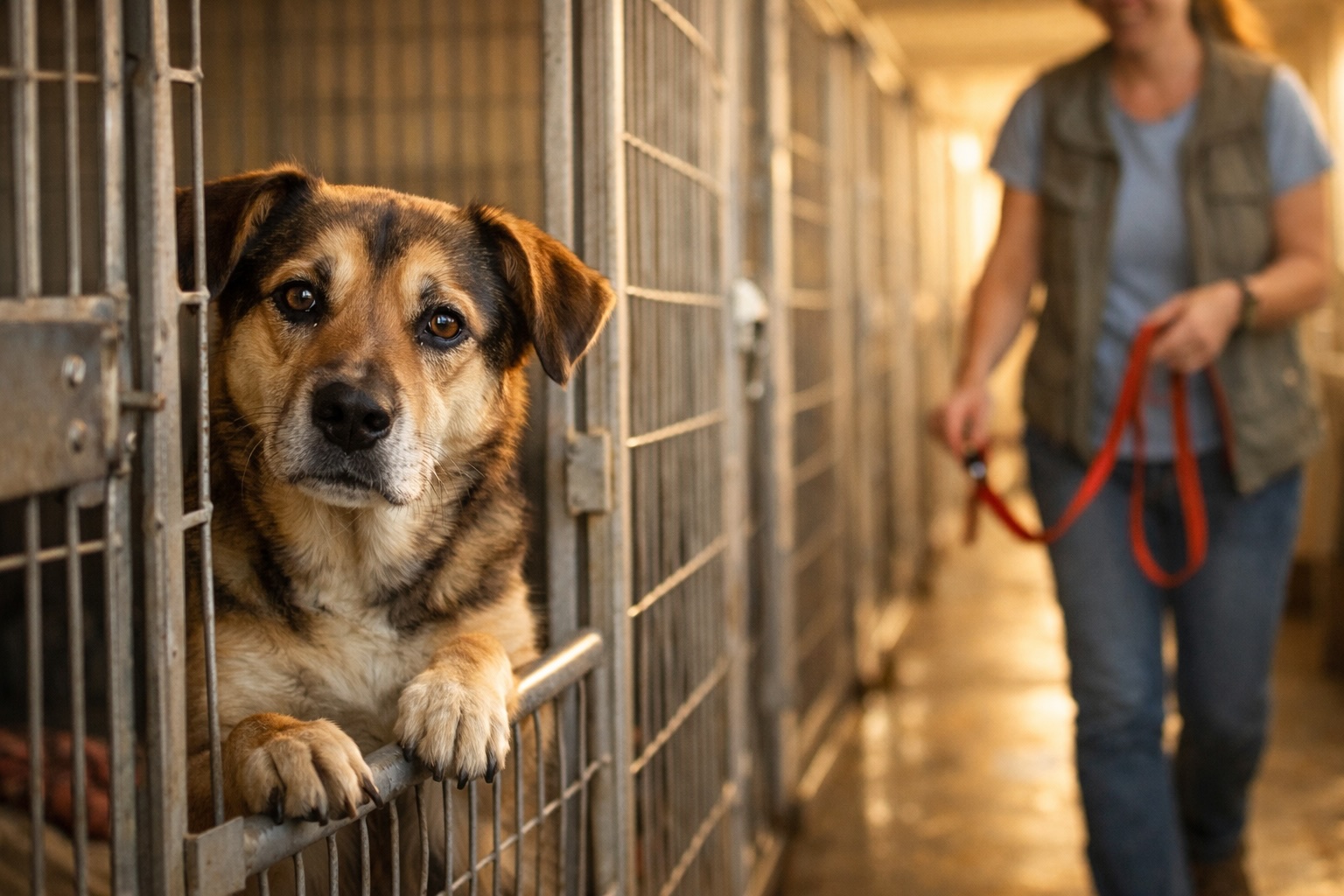
When folks picture a shelter dog, they often see one frozen moment: a face behind kennel bars, eyes fixed on the aisle, tail wagging or tucked under, hoping somebody stops. But that one glimpse never tells the whole story. I've spent enough years around dogs to know that what you see in a few seconds rarely explains the animal standing in front of you. A good dog can look shut down. A nervous dog can look wild. A dog with the makings of a fine companion, a steady therapy prospect, or even a service dog candidate may simply be doing its best to survive a hard season.
A day in the life of a shelter dog is shaped by routine, noise, scent, stress, and those brief pockets of human kindness that keep the world from going fully dark. For anyone looking to learn more about dogs, especially folks interested in companion dogs, therapy dogs, or service dogs, it helps to understand what shelter life asks of a dog. Once you do, you begin to see behavior in a different light. You stop asking, "What's wrong with that dog?" and start asking, "What has that dog been carrying?"
Morning Comes Early in the Kennels
Shelters wake up before the sun feels warm. Long before visitors arrive, the building starts to stir with footsteps, metal latches, running water, and the first bark that sets off a chain reaction. If you've ever stood near a row of kennels when dogs realize the day has begun, you know it's not a gentle sound. It hits in waves. Some dogs bark from excitement, some from frustration, and some because every other dog is doing it and silence feels unnatural.
For the dogs, morning means movement and anticipation. A few seasoned shelter dogs rise to the routine like old ranch hands hearing the feed truck. They know breakfast is coming. Others pace tight circles, jump at kennel doors, or crouch in the back corner waiting for the storm of activity to pass. The smells change with the hour too. Disinfectant, wet concrete, kibble, old blankets, soap, stress, and a hundred stories carried in on fur make up the scent of the place.
Staff and volunteers begin the practical work first. Kennels need cleaning. Water bowls need filling. Bedding gets shaken out or replaced. Dogs are rotated outside when space allows. Every one of those tasks matters, but from the dog's point of view, it can feel like the world is constantly being rearranged by strangers. Even kind handling can be overwhelming when a dog has no real control over its day.
Breakfast, Cleaning, and the Weight of Routine
Most shelter dogs live by a predictable schedule, and that routine is both a comfort and a burden. Dogs thrive on consistency, no doubt about it. A regular meal time, potty break, and exercise period can help settle the nerves. But routine in a shelter is not the same as peace at home. It's survival through structure. Meals may come fast. Walks may be short. Human attention may be split across dozens of dogs with different needs, temperaments, and medical concerns.
Some dogs eat as if they've never seen food before. Others sniff and walk away, too stressed to touch a bowl. That matters more than many people realize. Appetite tells a story. So does posture. So does whether a dog can relax after eating or stays fixed on the noise around him. A family looking for a future companion dog might mistake a quiet shelter dog for calm when he's actually overwhelmed. Another dog bouncing off the kennel wall may not be unruly by nature; he may simply be starved for movement, mental stimulation, and a little room to breathe.
The Midday Hours: Waiting, Watching, and Holding Steady
There's a stretch in most shelter days that feels long to the dogs. Once the morning rush settles, many of them are left to wait. Waiting may be the true job of a shelter dog. Waiting for a walk. Waiting for a volunteer. Waiting for a family. Waiting for the next sound in the hall. Waiting for the dog across the aisle to settle down so maybe, just maybe, they can rest.
This part of the day can be harder than people expect. Dogs are social animals, and even independent ones tend to do better with meaningful interaction, scent work, movement, and reassurance. In a shelter, stimulation often comes in uneven bursts. A visitor may pass by and pause at one kennel but not another. A dog may get ten exciting minutes outdoors and then spend hours inside listening to echoes and doors.
That uneven rhythm can shape behavior in powerful ways. A dog that appears aloof may have learned not to waste energy on hope. A dog that hurls himself at the kennel front may be trying to seize the only chance he gets to be noticed. I've seen many fine dogs look rough around the edges in that environment. Put them in a calm home, let them decompress, and they become altogether different animals.
How Shelter Stress Affects Behavior
If you want to understand a shelter dog, you have to respect stress for what it is. Stress changes sleep, digestion, attention, learning, and emotional resilience. It can make a gentle dog seem reactive. It can make a smart dog look scattered. It can make a trainable dog appear stubborn. That doesn't mean every shelter dog is suited for therapy work, service work, or even every household. It does mean first impressions should be handled with care.
Therapy dog prospects, for example, need a steady temperament, social confidence, and the ability to recover well from surprise or pressure. Service dog candidates need even more reliability, focus, resilience, and task potential. A shelter setting can hide those strengths just as easily as it can reveal limitations. The trick is patient evaluation. You watch how the dog responds over time, in different contexts, with different handlers. You look for recovery after stress, curiosity after fear, and connection after uncertainty.
Companion dogs, of course, come in many forms. For most homes, what matters most is not perfection but fit. A shelter dog who struggles in a loud kennel may thrive in a quiet household with routine and patient guidance. Another may need a more active home, more training, or more distance from chaos. The shelter environment is a chapter, not the whole book.
Afternoon Encounters: Walks, Meet-and-Greets, and Fleeting Chances
Afternoon often brings more foot traffic. This is when the luck of the day can change. Volunteers clip on leashes. Potential adopters stroll the rows. Staff members conduct evaluations, answer questions, and try to match dogs with the right people rather than the first people. For a shelter dog, these moments carry an enormous charge. A walk can be release, joy, confusion, or all three. A meet-and-greet can be the doorway to home or just another almost.
Outside the kennel, dogs often tell a truer story. The wild barker may soften as soon as his paws hit grass. The shy dog may start sniffing, leaning in, and making eye contact. Movement helps. Distance from the kennel noise helps. So does one-on-one attention. This is why I always tell people not to judge too fast from the aisle. If you are serious about finding the right dog, ask to see how the dog behaves in a quieter space. Watch how the dog checks in with the handler. Notice whether curiosity outweighs fear. See whether the dog can settle after excitement.
For families interested in a future therapy dog or dependable companion, these details matter. A dog doesn't need to be flashy. In fact, some of the best dogs are the ones that gather themselves before they engage. You want to see emotional balance, willingness, and the beginnings of trust. Those traits can be easy to miss if all you notice is kennel noise.
Evening in the Shelter: Fatigue, Hope, and the Long Quiet
As the day winds down, a different mood settles over the building. Some dogs are tired enough to finally rest. Others become more restless as activity fades. Evening can be lonely in a shelter. The lights change. The footsteps thin out. Dogs that spent all day hoping someone might stop at their kennel begin another night of waiting.
There is something about that hour that stays with a person. Maybe it's the way a dog curls into a blanket after a day of trying to be seen. Maybe it's the quiet stare of an old dog who has learned not to expect much but still lifts his head when you pass. Maybe it's the young dog who keeps pressing his nose through the bars as if the world might open if he wants it badly enough. However you put it, evening reminds you that shelter dogs are not just bodies in temporary housing. They are lives paused in uncertainty.
And yet, hope lives there too. It lives in the dog that finally eats with an appetite after days of stress. It lives in the frightened stray who starts wagging when her favorite volunteer appears. It lives in the dog once overlooked who leaves with a family willing to give him time to settle, learn, and belong.
What Future Owners Should Learn from Shelter Life
If you are considering adopting a dog for companionship, emotional support, therapy work, or the early evaluation of service potential, shelter life should teach you patience above all. Dogs coming out of shelters need decompression. They need room to sleep deeply, eat regularly, and discover that the world is no longer shifting under their feet. Many behavior questions cannot be answered on day one. Some cannot be answered in week one.
A shelter dog may arrive home and seem perfect, only to reveal anxiety once the numbness fades. Another may seem unsettled at first and then become a deeply loyal, even-tempered partner once routine takes hold. Good dog people understand that adoption is not a test of instant chemistry alone. It is a commitment to observation, structure, training, and mercy.
That is especially true if your interest leans toward therapy or service work. Not every good dog is suited for those jobs, and there is no shame in that. A marvelous companion dog may be the wrong fit for public access work. A sweet, affectionate dog may not have the nerve stability for therapy visits in hospitals or schools. The wise path is to let the dog become himself before assigning him a role. Start with health, bonding, routine, and basic skills. Then evaluate temperament honestly.
The Heart of the Matter
At the end of it, a day in the life of a shelter dog is a lesson in endurance. These dogs wake in a place they did not choose, move through noise they cannot escape, and lean on small rituals to make sense of uncertainty. Some are there for a brief stop on the road to home. Some wait far longer than they should. All of them are shaped, in one way or another, by the quality of care they receive and the patience of the people who meet them.
So when you walk through a shelter, look twice. Look past the barking, the jumping, the pacing, and the silence too. Somewhere in that row may be a faithful companion, a gentle therapy prospect, or a dog whose greatest gift is simply being steady and true at home. If you know what shelter life feels like from the dog's side of the kennel door, you stand a much better chance of seeing who that dog really is.
And sometimes, that second look is the one that changes both your lives.
A day in the life of a shelter dog is shaped by routine, noise, scent, stress, and those brief pockets of human kindness that keep the world from going fully dark. For anyone looking to learn more about dogs, especially folks interested in companion dogs, therapy dogs, or service dogs, it helps to understand what shelter life asks of a dog. Once you do, you begin to see behavior in a different light. You stop asking, "What's wrong with that dog?" and start asking, "What has that dog been carrying?"
Morning Comes Early in the Kennels
Shelters wake up before the sun feels warm. Long before visitors arrive, the building starts to stir with footsteps, metal latches, running water, and the first bark that sets off a chain reaction. If you've ever stood near a row of kennels when dogs realize the day has begun, you know it's not a gentle sound. It hits in waves. Some dogs bark from excitement, some from frustration, and some because every other dog is doing it and silence feels unnatural.
For the dogs, morning means movement and anticipation. A few seasoned shelter dogs rise to the routine like old ranch hands hearing the feed truck. They know breakfast is coming. Others pace tight circles, jump at kennel doors, or crouch in the back corner waiting for the storm of activity to pass. The smells change with the hour too. Disinfectant, wet concrete, kibble, old blankets, soap, stress, and a hundred stories carried in on fur make up the scent of the place.
Staff and volunteers begin the practical work first. Kennels need cleaning. Water bowls need filling. Bedding gets shaken out or replaced. Dogs are rotated outside when space allows. Every one of those tasks matters, but from the dog's point of view, it can feel like the world is constantly being rearranged by strangers. Even kind handling can be overwhelming when a dog has no real control over its day.
Breakfast, Cleaning, and the Weight of Routine
Most shelter dogs live by a predictable schedule, and that routine is both a comfort and a burden. Dogs thrive on consistency, no doubt about it. A regular meal time, potty break, and exercise period can help settle the nerves. But routine in a shelter is not the same as peace at home. It's survival through structure. Meals may come fast. Walks may be short. Human attention may be split across dozens of dogs with different needs, temperaments, and medical concerns.
Some dogs eat as if they've never seen food before. Others sniff and walk away, too stressed to touch a bowl. That matters more than many people realize. Appetite tells a story. So does posture. So does whether a dog can relax after eating or stays fixed on the noise around him. A family looking for a future companion dog might mistake a quiet shelter dog for calm when he's actually overwhelmed. Another dog bouncing off the kennel wall may not be unruly by nature; he may simply be starved for movement, mental stimulation, and a little room to breathe.
The Midday Hours: Waiting, Watching, and Holding Steady
There's a stretch in most shelter days that feels long to the dogs. Once the morning rush settles, many of them are left to wait. Waiting may be the true job of a shelter dog. Waiting for a walk. Waiting for a volunteer. Waiting for a family. Waiting for the next sound in the hall. Waiting for the dog across the aisle to settle down so maybe, just maybe, they can rest.
This part of the day can be harder than people expect. Dogs are social animals, and even independent ones tend to do better with meaningful interaction, scent work, movement, and reassurance. In a shelter, stimulation often comes in uneven bursts. A visitor may pass by and pause at one kennel but not another. A dog may get ten exciting minutes outdoors and then spend hours inside listening to echoes and doors.
That uneven rhythm can shape behavior in powerful ways. A dog that appears aloof may have learned not to waste energy on hope. A dog that hurls himself at the kennel front may be trying to seize the only chance he gets to be noticed. I've seen many fine dogs look rough around the edges in that environment. Put them in a calm home, let them decompress, and they become altogether different animals.
How Shelter Stress Affects Behavior
If you want to understand a shelter dog, you have to respect stress for what it is. Stress changes sleep, digestion, attention, learning, and emotional resilience. It can make a gentle dog seem reactive. It can make a smart dog look scattered. It can make a trainable dog appear stubborn. That doesn't mean every shelter dog is suited for therapy work, service work, or even every household. It does mean first impressions should be handled with care.
Therapy dog prospects, for example, need a steady temperament, social confidence, and the ability to recover well from surprise or pressure. Service dog candidates need even more reliability, focus, resilience, and task potential. A shelter setting can hide those strengths just as easily as it can reveal limitations. The trick is patient evaluation. You watch how the dog responds over time, in different contexts, with different handlers. You look for recovery after stress, curiosity after fear, and connection after uncertainty.
Companion dogs, of course, come in many forms. For most homes, what matters most is not perfection but fit. A shelter dog who struggles in a loud kennel may thrive in a quiet household with routine and patient guidance. Another may need a more active home, more training, or more distance from chaos. The shelter environment is a chapter, not the whole book.
Afternoon Encounters: Walks, Meet-and-Greets, and Fleeting Chances
Afternoon often brings more foot traffic. This is when the luck of the day can change. Volunteers clip on leashes. Potential adopters stroll the rows. Staff members conduct evaluations, answer questions, and try to match dogs with the right people rather than the first people. For a shelter dog, these moments carry an enormous charge. A walk can be release, joy, confusion, or all three. A meet-and-greet can be the doorway to home or just another almost.
Outside the kennel, dogs often tell a truer story. The wild barker may soften as soon as his paws hit grass. The shy dog may start sniffing, leaning in, and making eye contact. Movement helps. Distance from the kennel noise helps. So does one-on-one attention. This is why I always tell people not to judge too fast from the aisle. If you are serious about finding the right dog, ask to see how the dog behaves in a quieter space. Watch how the dog checks in with the handler. Notice whether curiosity outweighs fear. See whether the dog can settle after excitement.
For families interested in a future therapy dog or dependable companion, these details matter. A dog doesn't need to be flashy. In fact, some of the best dogs are the ones that gather themselves before they engage. You want to see emotional balance, willingness, and the beginnings of trust. Those traits can be easy to miss if all you notice is kennel noise.
Evening in the Shelter: Fatigue, Hope, and the Long Quiet
As the day winds down, a different mood settles over the building. Some dogs are tired enough to finally rest. Others become more restless as activity fades. Evening can be lonely in a shelter. The lights change. The footsteps thin out. Dogs that spent all day hoping someone might stop at their kennel begin another night of waiting.
There is something about that hour that stays with a person. Maybe it's the way a dog curls into a blanket after a day of trying to be seen. Maybe it's the quiet stare of an old dog who has learned not to expect much but still lifts his head when you pass. Maybe it's the young dog who keeps pressing his nose through the bars as if the world might open if he wants it badly enough. However you put it, evening reminds you that shelter dogs are not just bodies in temporary housing. They are lives paused in uncertainty.
And yet, hope lives there too. It lives in the dog that finally eats with an appetite after days of stress. It lives in the frightened stray who starts wagging when her favorite volunteer appears. It lives in the dog once overlooked who leaves with a family willing to give him time to settle, learn, and belong.
What Future Owners Should Learn from Shelter Life
If you are considering adopting a dog for companionship, emotional support, therapy work, or the early evaluation of service potential, shelter life should teach you patience above all. Dogs coming out of shelters need decompression. They need room to sleep deeply, eat regularly, and discover that the world is no longer shifting under their feet. Many behavior questions cannot be answered on day one. Some cannot be answered in week one.
A shelter dog may arrive home and seem perfect, only to reveal anxiety once the numbness fades. Another may seem unsettled at first and then become a deeply loyal, even-tempered partner once routine takes hold. Good dog people understand that adoption is not a test of instant chemistry alone. It is a commitment to observation, structure, training, and mercy.
That is especially true if your interest leans toward therapy or service work. Not every good dog is suited for those jobs, and there is no shame in that. A marvelous companion dog may be the wrong fit for public access work. A sweet, affectionate dog may not have the nerve stability for therapy visits in hospitals or schools. The wise path is to let the dog become himself before assigning him a role. Start with health, bonding, routine, and basic skills. Then evaluate temperament honestly.
The Heart of the Matter
At the end of it, a day in the life of a shelter dog is a lesson in endurance. These dogs wake in a place they did not choose, move through noise they cannot escape, and lean on small rituals to make sense of uncertainty. Some are there for a brief stop on the road to home. Some wait far longer than they should. All of them are shaped, in one way or another, by the quality of care they receive and the patience of the people who meet them.
So when you walk through a shelter, look twice. Look past the barking, the jumping, the pacing, and the silence too. Somewhere in that row may be a faithful companion, a gentle therapy prospect, or a dog whose greatest gift is simply being steady and true at home. If you know what shelter life feels like from the dog's side of the kennel door, you stand a much better chance of seeing who that dog really is.
And sometimes, that second look is the one that changes both your lives.



View all 0 comments