
Daily Schedule for a Newly Adopted Dog
Building Trust, Routine, and Calm From Day One
Jeff Davis | https://rescuedogcentral.com
 0
0 0
0 0
0 0
0 0
0
Bringing home a newly adopted dog is a little like leading a green hunting pup into unfamiliar timber at first light. The world is full of strange smells, odd sounds, and more questions than answers. Some dogs come in bold, tail high and ready to inspect every corner. Others slip through the doorway with the kind of caution that tells you life has not always been gentle. Either way, what they need most in those first days is not excitement. They need order. A dependable daily schedule for a newly adopted dog gives that animal something solid to lean on when everything else feels new.
Whether you are welcoming a companion dog into the family, preparing a calm prospect for therapy work, or helping a future service dog settle into a home routine, structure matters. Dogs understand patterns faster than speeches. Feed them at steady times, take them out on a predictable rhythm, and keep rest periods protected, and you will often see stress begin to drain away. A good schedule does not just make your day easier. It teaches a dog that your home is safe, that your leadership is reliable, and that good things happen when life follows a sensible course.
Why Routine Matters in the First Few Weeks
A newly adopted dog is processing more than most people realize. New human voices, new flooring underfoot, new food smells, new rules, and sometimes a new crate or bed can leave even a sturdy dog feeling unsteady. When that uncertainty builds, behavior can wobble. You may see pacing, whining, accidents in the house, refusal to eat, or clingy shadowing from room to room. Those behaviors do not always mean you have a difficult dog. Often, they mean you have a dog trying to get his bearings.
Routine lowers that pressure. Predictability helps a dog relax because he starts to understand what comes next. Morning means outside, then breakfast, then a little quiet. Afternoon means another potty break, a walk, and a rest. Evening means time with the family and then bed. It sounds simple, but simple is exactly what many rescue dogs need. This is especially important for dogs being considered for therapy dog or service dog training, because steadiness at home lays the groundwork for steadiness in the wider world.
A Practical Daily Schedule for a Newly Adopted Dog
The best schedule is not fancy. It is repeatable. A newly adopted dog usually does well with regular wake-up times, frequent potty trips, short training sessions, measured exercise, and enough sleep. Most dogs, especially during the adjustment period, need more rest than owners expect. If you push too much stimulation too soon, you can stir up stress instead of confidence.
Early Morning: Quiet Start, Potty First
When the day begins, head outside before anything else. Do not linger over coffee while your new dog circles the kitchen. Get him to his potty spot and give him a calm chance to relieve himself. Early success outside sets the tone for the day and helps prevent accidents from becoming a pattern. If the dog is shy, keep your body language easy and your expectations modest. Some rescue dogs will not go right away on leash, especially if they are still learning that the yard is theirs to use without fear.
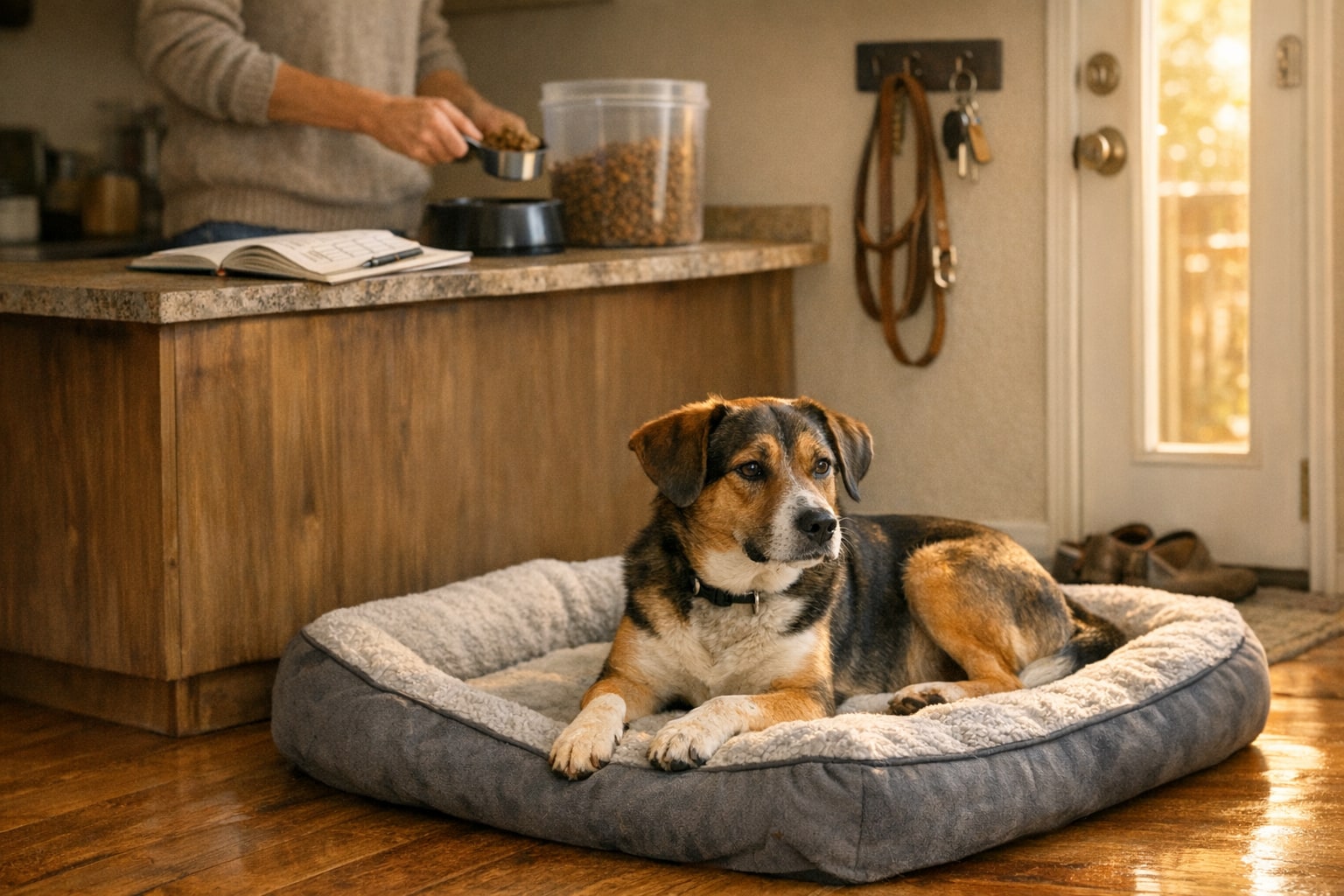
Once that first bathroom break is handled, bring him inside for breakfast. Feed in the same area each morning so the dog learns where his meals happen. Consistency around food is useful for all dogs, but especially for those with uncertain backgrounds. After breakfast, allow a calm decompression period. That might mean ten or fifteen minutes of quiet companionship, gentle petting if the dog seeks it, or a short chew item in a crate or on a dog bed. Avoid turning the morning into a carnival. Let the dog settle into the rhythm of the household.
Mid-Morning: Light Exercise and Bonding
After breakfast and digestion time, a short walk or yard session works well. For a newly adopted dog, this is not the hour for a hard run or an overwhelming trip to a crowded park. Think of it as a chance to stretch legs, sniff the world, and learn how to move with you. Sniffing is not wasted time. It is how dogs gather information and reduce stress. A measured, sniff-friendly walk often does more good than a forced march around the block.
This is also an excellent time for a brief training session. Keep it short and clean. Practice the dog’s name, reward eye contact, and begin simple cues such as sit, come, or leash walking with soft praise and small treats. If you have hopes for therapy dog manners or service dog foundations later on, these first sessions should focus on attention, calmness, and trust rather than flashy performance. A dog that learns to check in with you willingly is worth far more than a dog hurried through commands he barely understands.
Late Morning to Early Afternoon: Rest Matters More Than You Think
Here is where many good-hearted owners make a mistake. They assume a new dog needs constant activity to tire him out and help him adjust. In truth, a lot of newly adopted dogs are overtired already. New environments can flood them with stimulation. A proper rest period in late morning or early afternoon helps the nervous system settle. Crate time, gated quiet time, or a nap on a bed in a low-traffic room can make a remarkable difference in mood and behavior.
If you work from home, do not encourage nonstop following and attention-seeking. Teach the dog that calm independence is part of daily life. That lesson pays off in companion homes and is even more valuable for dogs intended for therapy or service roles, where emotional steadiness and patience are essential.
Afternoon: Potty Break, Meal if Needed, and Gentle Engagement
In the afternoon, head out again for another potty break. Younger dogs and dogs still learning the house routine may need frequent trips, sometimes every two to four hours. Adult dogs with reliable habits may stretch longer, but in the first week or two it is wise to stay ahead of accidents rather than react to them.
If your dog eats twice a day, dinner may come later in the evening. If your veterinarian or rescue transition plan calls for a midday meal, keep it at a fixed time. Then follow with a little engagement. This can be a short leash walk, a food puzzle, gentle retrieval games in the yard, or a few minutes of obedience work. I often tell folks to watch the dog’s eyes and breathing. If he is bright, loose, and interested, you can continue a bit. If he starts getting jumpy, mouthy, overexcited, or distracted, he is likely telling you he has had enough.
Evening Routine: Settling the House and the Dog
Evenings are where the household either helps a dog relax or accidentally winds him up. After the day’s activity, offer dinner at the same time each night. Take the dog out again soon after eating. Then give him a chance to be near the family without making him the center of constant commotion. For some dogs, lying at your feet while the house quiets down is a big step toward trust. For others, especially those who become overstimulated, a chew in a crate or a calm corner may be the better choice.
This is also a fine window for handling exercises done gently and respectfully. Touch the collar, lift a paw, stroke the ears, reward calm acceptance, and stop before the dog feels pressured. That kind of patient, quiet work helps companion dogs become easier to live with and supports the kind of body handling tolerance that matters for therapy dog evaluations and service dog training foundations.
Before bed, make one final potty trip non-negotiable. Keep it quiet and businesslike. Late-night play in the yard may seem harmless, but it can teach some dogs that bedtime means excitement. What you want is the opposite. A final trip out, a return inside, and lights down at a predictable hour tells the dog the day is done.
Adjusting the Schedule for Companion, Therapy, and Service Dog Homes
Not every dog will follow the same clock, but the bones of the schedule remain much the same. A companion dog may need extra emphasis on house manners, bonding, and comfortable alone time. A therapy dog prospect benefits from routines that encourage calm social confidence, gentle exposure, and the ability to settle in different settings without falling apart. A future service dog needs consistency, emotional balance, and clear structure from the start. In all three cases, the daily schedule should support confidence rather than pressure.
One thing I have learned over the years is that slow is often fast with dogs. Push too many outings, too many visitors, too much affection, too much freedom, and you can muddy the waters. Keep life steady, and a dog often shows you who he really is. That matters when deciding how much training, work, and social expectation he can carry in the future.
Common Mistakes in a Newly Adopted Dog Schedule
The biggest mistake is inconsistency. Feeding at random times, skipping potty breaks, and changing sleep locations every other night make the dog’s adjustment harder than it needs to be. Another common error is introducing the dog to too much too soon. A new dog does not need a tour of every store in town, a parade of visiting neighbors, and a photo session for social media in the first weekend. He needs to learn your house, your voice, your rules, and your routine.
It is also wise to be careful with exercise. There is a difference between healthy movement and overstimulation. Many dogs that look wild in the evening are not under-exercised; they are overtired and frayed. A schedule with proper naps can do more for behavior than another mile on the leash.
How Long Before the Routine Feels Natural?
Some dogs settle in within days. Others take weeks before they begin to exhale and trust the pattern. That is normal. Rescue dogs arrive with their own history, and not all of it is visible. Stay patient. Keep mealtimes consistent, keep outings regular, and make your expectations fair and clear. Over time, the dog will begin anticipating what comes next, and with that anticipation often comes peace.
A daily schedule for a newly adopted dog is not about running a military camp. It is about giving an animal a dependable framework in a world that may have failed him before. When a dog knows where to sleep, when to eat, when to go outside, and how to find calm in your home, trust starts growing like good cover after a steady rain. From there, whether he becomes a loyal couch-side companion, a gentle therapy dog, or a focused service partner, you have given him the best possible start.
Whether you are welcoming a companion dog into the family, preparing a calm prospect for therapy work, or helping a future service dog settle into a home routine, structure matters. Dogs understand patterns faster than speeches. Feed them at steady times, take them out on a predictable rhythm, and keep rest periods protected, and you will often see stress begin to drain away. A good schedule does not just make your day easier. It teaches a dog that your home is safe, that your leadership is reliable, and that good things happen when life follows a sensible course.
Why Routine Matters in the First Few Weeks
A newly adopted dog is processing more than most people realize. New human voices, new flooring underfoot, new food smells, new rules, and sometimes a new crate or bed can leave even a sturdy dog feeling unsteady. When that uncertainty builds, behavior can wobble. You may see pacing, whining, accidents in the house, refusal to eat, or clingy shadowing from room to room. Those behaviors do not always mean you have a difficult dog. Often, they mean you have a dog trying to get his bearings.
Routine lowers that pressure. Predictability helps a dog relax because he starts to understand what comes next. Morning means outside, then breakfast, then a little quiet. Afternoon means another potty break, a walk, and a rest. Evening means time with the family and then bed. It sounds simple, but simple is exactly what many rescue dogs need. This is especially important for dogs being considered for therapy dog or service dog training, because steadiness at home lays the groundwork for steadiness in the wider world.
A Practical Daily Schedule for a Newly Adopted Dog
The best schedule is not fancy. It is repeatable. A newly adopted dog usually does well with regular wake-up times, frequent potty trips, short training sessions, measured exercise, and enough sleep. Most dogs, especially during the adjustment period, need more rest than owners expect. If you push too much stimulation too soon, you can stir up stress instead of confidence.
Early Morning: Quiet Start, Potty First
When the day begins, head outside before anything else. Do not linger over coffee while your new dog circles the kitchen. Get him to his potty spot and give him a calm chance to relieve himself. Early success outside sets the tone for the day and helps prevent accidents from becoming a pattern. If the dog is shy, keep your body language easy and your expectations modest. Some rescue dogs will not go right away on leash, especially if they are still learning that the yard is theirs to use without fear.
Once that first bathroom break is handled, bring him inside for breakfast. Feed in the same area each morning so the dog learns where his meals happen. Consistency around food is useful for all dogs, but especially for those with uncertain backgrounds. After breakfast, allow a calm decompression period. That might mean ten or fifteen minutes of quiet companionship, gentle petting if the dog seeks it, or a short chew item in a crate or on a dog bed. Avoid turning the morning into a carnival. Let the dog settle into the rhythm of the household.
Mid-Morning: Light Exercise and Bonding
After breakfast and digestion time, a short walk or yard session works well. For a newly adopted dog, this is not the hour for a hard run or an overwhelming trip to a crowded park. Think of it as a chance to stretch legs, sniff the world, and learn how to move with you. Sniffing is not wasted time. It is how dogs gather information and reduce stress. A measured, sniff-friendly walk often does more good than a forced march around the block.
This is also an excellent time for a brief training session. Keep it short and clean. Practice the dog’s name, reward eye contact, and begin simple cues such as sit, come, or leash walking with soft praise and small treats. If you have hopes for therapy dog manners or service dog foundations later on, these first sessions should focus on attention, calmness, and trust rather than flashy performance. A dog that learns to check in with you willingly is worth far more than a dog hurried through commands he barely understands.
Late Morning to Early Afternoon: Rest Matters More Than You Think
Here is where many good-hearted owners make a mistake. They assume a new dog needs constant activity to tire him out and help him adjust. In truth, a lot of newly adopted dogs are overtired already. New environments can flood them with stimulation. A proper rest period in late morning or early afternoon helps the nervous system settle. Crate time, gated quiet time, or a nap on a bed in a low-traffic room can make a remarkable difference in mood and behavior.
If you work from home, do not encourage nonstop following and attention-seeking. Teach the dog that calm independence is part of daily life. That lesson pays off in companion homes and is even more valuable for dogs intended for therapy or service roles, where emotional steadiness and patience are essential.
Afternoon: Potty Break, Meal if Needed, and Gentle Engagement
In the afternoon, head out again for another potty break. Younger dogs and dogs still learning the house routine may need frequent trips, sometimes every two to four hours. Adult dogs with reliable habits may stretch longer, but in the first week or two it is wise to stay ahead of accidents rather than react to them.
If your dog eats twice a day, dinner may come later in the evening. If your veterinarian or rescue transition plan calls for a midday meal, keep it at a fixed time. Then follow with a little engagement. This can be a short leash walk, a food puzzle, gentle retrieval games in the yard, or a few minutes of obedience work. I often tell folks to watch the dog’s eyes and breathing. If he is bright, loose, and interested, you can continue a bit. If he starts getting jumpy, mouthy, overexcited, or distracted, he is likely telling you he has had enough.
Evening Routine: Settling the House and the Dog
Evenings are where the household either helps a dog relax or accidentally winds him up. After the day’s activity, offer dinner at the same time each night. Take the dog out again soon after eating. Then give him a chance to be near the family without making him the center of constant commotion. For some dogs, lying at your feet while the house quiets down is a big step toward trust. For others, especially those who become overstimulated, a chew in a crate or a calm corner may be the better choice.
This is also a fine window for handling exercises done gently and respectfully. Touch the collar, lift a paw, stroke the ears, reward calm acceptance, and stop before the dog feels pressured. That kind of patient, quiet work helps companion dogs become easier to live with and supports the kind of body handling tolerance that matters for therapy dog evaluations and service dog training foundations.
Before bed, make one final potty trip non-negotiable. Keep it quiet and businesslike. Late-night play in the yard may seem harmless, but it can teach some dogs that bedtime means excitement. What you want is the opposite. A final trip out, a return inside, and lights down at a predictable hour tells the dog the day is done.
Adjusting the Schedule for Companion, Therapy, and Service Dog Homes
Not every dog will follow the same clock, but the bones of the schedule remain much the same. A companion dog may need extra emphasis on house manners, bonding, and comfortable alone time. A therapy dog prospect benefits from routines that encourage calm social confidence, gentle exposure, and the ability to settle in different settings without falling apart. A future service dog needs consistency, emotional balance, and clear structure from the start. In all three cases, the daily schedule should support confidence rather than pressure.
One thing I have learned over the years is that slow is often fast with dogs. Push too many outings, too many visitors, too much affection, too much freedom, and you can muddy the waters. Keep life steady, and a dog often shows you who he really is. That matters when deciding how much training, work, and social expectation he can carry in the future.
Common Mistakes in a Newly Adopted Dog Schedule
The biggest mistake is inconsistency. Feeding at random times, skipping potty breaks, and changing sleep locations every other night make the dog’s adjustment harder than it needs to be. Another common error is introducing the dog to too much too soon. A new dog does not need a tour of every store in town, a parade of visiting neighbors, and a photo session for social media in the first weekend. He needs to learn your house, your voice, your rules, and your routine.
It is also wise to be careful with exercise. There is a difference between healthy movement and overstimulation. Many dogs that look wild in the evening are not under-exercised; they are overtired and frayed. A schedule with proper naps can do more for behavior than another mile on the leash.
How Long Before the Routine Feels Natural?
Some dogs settle in within days. Others take weeks before they begin to exhale and trust the pattern. That is normal. Rescue dogs arrive with their own history, and not all of it is visible. Stay patient. Keep mealtimes consistent, keep outings regular, and make your expectations fair and clear. Over time, the dog will begin anticipating what comes next, and with that anticipation often comes peace.
A daily schedule for a newly adopted dog is not about running a military camp. It is about giving an animal a dependable framework in a world that may have failed him before. When a dog knows where to sleep, when to eat, when to go outside, and how to find calm in your home, trust starts growing like good cover after a steady rain. From there, whether he becomes a loyal couch-side companion, a gentle therapy dog, or a focused service partner, you have given him the best possible start.



View all 0 comments