The Difference Between Feral and Stray Dogs
Jeff Davis | https://rescuedogcentral.com
 0
0 0
0 0
0 0
0 0
0
If you spend enough time around dogs, out on the back roads, near timber edges, behind old feed stores, or around the empty lots on the edge of town, you learn quick that not every loose dog is the same. Folks often use the words feral and stray like they mean one thing, but they do not. That misunderstanding can lead to poor rescue decisions, unsafe approaches, and unrealistic expectations about whether a dog can settle into life as a companion dog, therapy dog, or even, in rare cases, a service dog prospect.
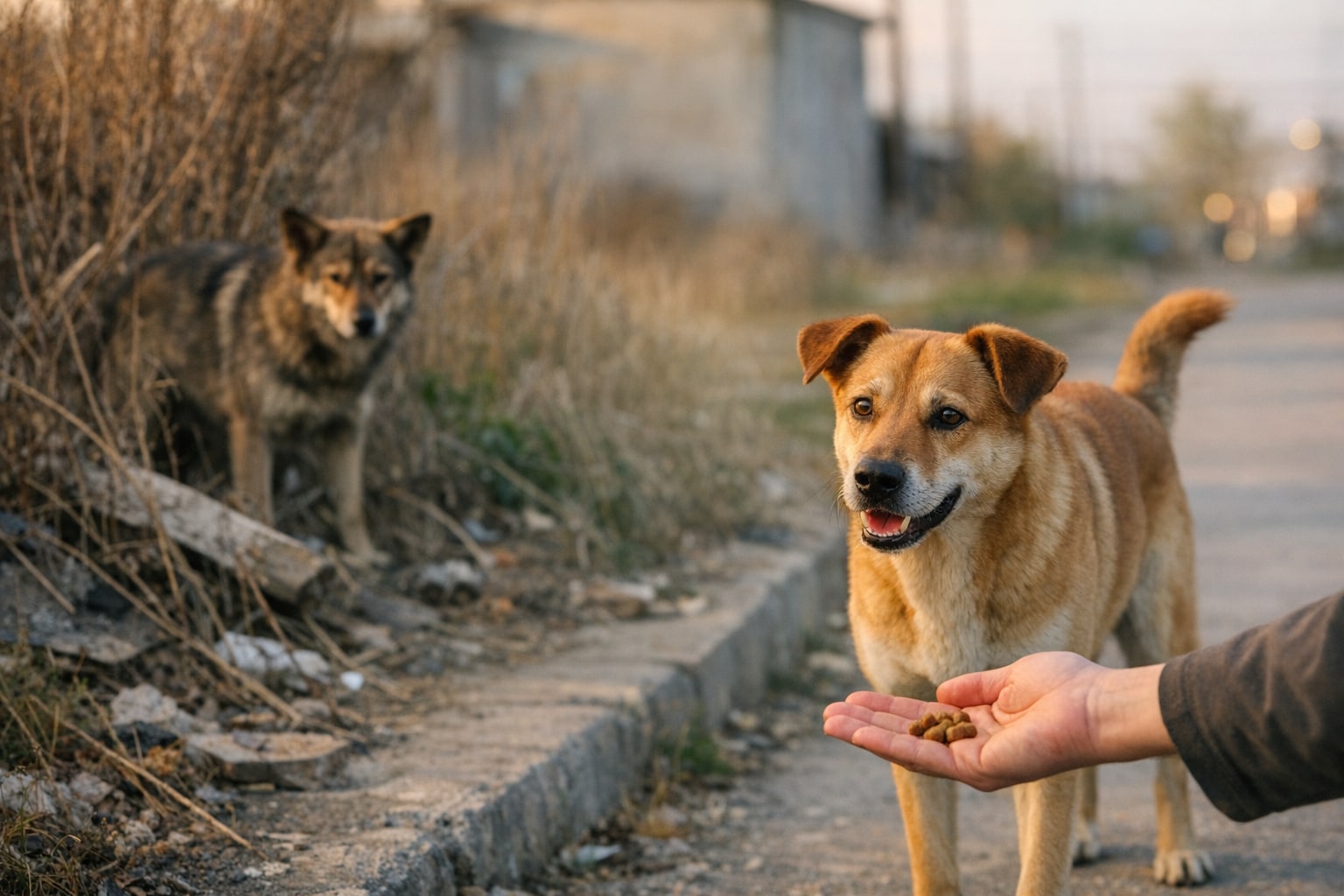
I have seen dogs that drifted up to a porch hungry, tail low but hopeful, and within an hour they were leaning against a human leg like they had been missing home for weeks. I have also watched hard-eyed dogs slip through brush like coyotes, keeping distance, reading every movement, and making it plain they wanted nothing to do with people. Both may be living without an owner in that moment, but one is usually stray and the other is often feral. That difference matters more than most people realize.
What Is a Stray Dog?
A stray dog is generally a dog that has lived with people at some point and become lost, abandoned, or separated from its home. Stray dogs may roam for days, weeks, or longer, but their behavior still shows some connection to humans. Even if they are frightened, many strays will watch people with interest, respond to a friendly tone, approach food left nearby, or show signs of socialization like wagging, making eye contact, or seeking shelter close to homes.
Some strays look rough fast. A well-kept family dog can turn thin, dirty, and skittish in a surprisingly short time once it starts living outdoors. Hunger changes behavior. Fear changes posture. A dog that was once easygoing in a living room may seem nervous and defensive after just a few bad nights out in the open. That does not make the dog feral. It means the dog is under stress and trying to survive.
For families interested in companion dogs, this is an important point. A stray may still have the foundation needed to return to home life. With patience, veterinary care, and steady handling, many stray dogs readjust well because they already understand some part of human routine. They may know doors, leashes, food bowls, names, or the comfort of sleeping near people.
What Is a Feral Dog?
A feral dog is different in both background and mindset. A truly feral dog has little to no positive human socialization, especially during the critical early months of life. Some were born in the wild to free-roaming dogs. Others were abandoned so young that they never formed normal bonds with people. Over time, these dogs operate more like wild animals than house pets. Their survival depends on avoiding human contact, reading danger quickly, and trusting instinct over interaction.
When I say a feral dog behaves more like a wild animal, I do not mean it is evil or broken. I mean its habits are shaped by life outside human care. A feral dog often keeps substantial distance, moves quietly, avoids direct approach, and may travel in patterns tied to food, cover, and safety rather than to people. If cornered, it may freeze, bolt, or fight with a level of panic that is not typical of a socialized house dog.
This is where many kind-hearted people get into trouble. They assume every loose dog wants rescue in the usual sense. A feral dog may need humane intervention, but it often does not respond to comforting gestures the way a stray dog does. Soft talk, kneeling down, or holding out a hand may work on a frightened stray. On a feral dog, those same actions may only increase alarm.
Why Early Socialization Makes the Difference
The line between feral and stray comes down largely to socialization. Dogs are born with the ability to bond with humans, but that bond needs shaping early. Puppies exposed to gentle handling, voices, routine, and safe human contact during their developmental window are far more likely to become socially adaptable. Puppies raised with little or no human contact often grow into dogs that see people as a threat or an unpredictable force rather than a source of safety.
That early imprint matters deeply for future roles. Therapy dogs need calm, stable sociability with strangers. Service dogs need confidence, trainability, and trust in human partnership. Companion dogs need enough emotional flexibility to live peacefully in a home. A former stray may, under the right circumstances, grow into a wonderful companion. A truly feral adult dog may never be comfortable in those roles, even with skilled rehabilitation.
How to Tell the Difference Between a Feral and Stray Dog
In the field, the clues are usually behavioral before they are physical. A stray dog often circles human spaces. It may linger near gas stations, houses, barns, schoolyards, or roadside businesses because it associates people with food or help. A feral dog usually prefers edges, cover, drainage lines, vacant ground, wooded lots, and places where it can observe without being seen. One drifts toward human activity. The other tends to skirt it.
Body language tells another part of the story. Stray dogs may appear conflicted. They want help but are afraid. They might approach and retreat, wag nervously, lower their head, or creep toward tossed food. Feral dogs are often more decisive in avoiding contact. They may not bark much. They may not make friendly eye contact. Their movement can look sharp, efficient, and purpose-driven, almost like a coyote’s, especially in areas where dogs have had to fend for themselves for generations.
There are gray areas, of course. A long-term stray can begin acting feral after enough time without safe human contact. A feral-born pup captured young may become socialized and thrive in a home. That is why labels should guide observation, not replace it. Still, knowing the general difference helps rescuers, adopters, and ordinary dog lovers make wiser choices.
Appearance Can Mislead You
People often judge by coat condition, weight, or whether the dog wears a collar. That can lead them wrong. Some stray dogs lose collars. Some feral dogs may look healthy because they have adapted well to scavenging or hunting. Some owned dogs free-roam in rural areas and appear half-wild while still returning home at night. You cannot classify a dog accurately by looks alone. Behavior around humans remains the strongest clue.
Why the Difference Matters for Rescue and Adoption
When a dog is identified correctly as stray or feral, the rescue plan improves. A stray dog may be helped through familiar methods: food, calm presence, leash introduction, veterinary evaluation, identification checks, and foster placement. A feral dog may require traps, quiet containment, minimal stimulation, and a much slower behavioral assessment. Handling a feral dog like a socialized pet can escalate stress, injury risk, and fear-based behavior.
For someone searching for a future therapy dog, service dog, or reliable companion dog, this distinction matters at the adoption stage too. A dog with a stray background is not automatically a good fit, but it may have the social foundation needed to bond, train, and recover. A feral dog may deserve safety and humane care, yet still be a poor candidate for public-facing work or busy household life. That is not a failure on the dog’s part. It is simply honesty about temperament, history, and welfare.
I have known a few rescued strays that turned into first-rate house dogs, the sort that rest easy at your feet and watch the door like they have always belonged there. I have also seen people force expectations onto feral dogs because they wanted a happy ending that looked a certain way. Sometimes the kindest outcome is not turning a dog into what we want, but giving it the safest environment it can truly handle.
Can a Feral Dog Become a Companion Dog?
Sometimes, but not always, and usually not quickly. Age matters. A young feral puppy has a far better chance than an adult feral dog. Individual temperament matters too. Some dogs have more curiosity and resilience than others. With expert rehabilitation, structured exposure, and a very patient home, certain feral dogs can become manageable companions. But many remain wary, touch-sensitive, noise-sensitive, or deeply uncomfortable with strangers and indoor life.
That means families should be careful not to confuse rescue with readiness. If your goal is a therapy dog, a service dog candidate, or a dog that can confidently move through busy public settings, a feral background is usually a serious obstacle. If your goal is to provide sanctuary to a dog that may never be social in the usual sense, that is a different conversation and can be a noble one, provided expectations are realistic.
Safety Tips When You Encounter a Loose Dog
If you come across a dog and do not know whether it is stray or feral, move with caution. Do not rush in, corner it, or try to grab its collar. Keep your posture easy, avoid staring, and assess from a distance. Food can help, but it is not a magic key. If the dog appears fearful, injured, or highly avoidant, call local animal control, a rescue group, or an experienced dog handler. Good intentions are no substitute for safe technique.
This matters especially for families with children or for people who already own dogs. A frightened loose dog may react unpredictably, even if it is not aggressive by nature. Bringing your own dog into the situation can raise tension fast. Let observation lead the next step, not emotion.
Final Thoughts on Feral vs Stray Dogs
The difference between feral and stray dogs comes down to more than where the dog sleeps at night. It is about relationship, or the lack of one, with people. A stray dog usually has known human care and may be trying to find its way back to it. A feral dog has often learned that survival depends on distance from humans, not closeness to them.
Understanding that truth helps all of us make better decisions. It helps rescuers choose the right approach. It helps adopters set realistic expectations. And it helps anyone interested in companion dogs, therapy dogs, or service dogs recognize which dogs may have the social foundation for those roles and which may need a very different kind of support.
Out in the field, the sign is not always obvious at first glance. But if you slow down and watch how a dog moves, where it stands, and whether it looks to people for help or away from them for safety, the story usually starts to tell itself. And when you read that story right, you give the dog its best chance at the right kind of future.
I have seen dogs that drifted up to a porch hungry, tail low but hopeful, and within an hour they were leaning against a human leg like they had been missing home for weeks. I have also watched hard-eyed dogs slip through brush like coyotes, keeping distance, reading every movement, and making it plain they wanted nothing to do with people. Both may be living without an owner in that moment, but one is usually stray and the other is often feral. That difference matters more than most people realize.
What Is a Stray Dog?
A stray dog is generally a dog that has lived with people at some point and become lost, abandoned, or separated from its home. Stray dogs may roam for days, weeks, or longer, but their behavior still shows some connection to humans. Even if they are frightened, many strays will watch people with interest, respond to a friendly tone, approach food left nearby, or show signs of socialization like wagging, making eye contact, or seeking shelter close to homes.
Some strays look rough fast. A well-kept family dog can turn thin, dirty, and skittish in a surprisingly short time once it starts living outdoors. Hunger changes behavior. Fear changes posture. A dog that was once easygoing in a living room may seem nervous and defensive after just a few bad nights out in the open. That does not make the dog feral. It means the dog is under stress and trying to survive.
For families interested in companion dogs, this is an important point. A stray may still have the foundation needed to return to home life. With patience, veterinary care, and steady handling, many stray dogs readjust well because they already understand some part of human routine. They may know doors, leashes, food bowls, names, or the comfort of sleeping near people.
What Is a Feral Dog?
A feral dog is different in both background and mindset. A truly feral dog has little to no positive human socialization, especially during the critical early months of life. Some were born in the wild to free-roaming dogs. Others were abandoned so young that they never formed normal bonds with people. Over time, these dogs operate more like wild animals than house pets. Their survival depends on avoiding human contact, reading danger quickly, and trusting instinct over interaction.
When I say a feral dog behaves more like a wild animal, I do not mean it is evil or broken. I mean its habits are shaped by life outside human care. A feral dog often keeps substantial distance, moves quietly, avoids direct approach, and may travel in patterns tied to food, cover, and safety rather than to people. If cornered, it may freeze, bolt, or fight with a level of panic that is not typical of a socialized house dog.
This is where many kind-hearted people get into trouble. They assume every loose dog wants rescue in the usual sense. A feral dog may need humane intervention, but it often does not respond to comforting gestures the way a stray dog does. Soft talk, kneeling down, or holding out a hand may work on a frightened stray. On a feral dog, those same actions may only increase alarm.
Why Early Socialization Makes the Difference
The line between feral and stray comes down largely to socialization. Dogs are born with the ability to bond with humans, but that bond needs shaping early. Puppies exposed to gentle handling, voices, routine, and safe human contact during their developmental window are far more likely to become socially adaptable. Puppies raised with little or no human contact often grow into dogs that see people as a threat or an unpredictable force rather than a source of safety.
That early imprint matters deeply for future roles. Therapy dogs need calm, stable sociability with strangers. Service dogs need confidence, trainability, and trust in human partnership. Companion dogs need enough emotional flexibility to live peacefully in a home. A former stray may, under the right circumstances, grow into a wonderful companion. A truly feral adult dog may never be comfortable in those roles, even with skilled rehabilitation.
How to Tell the Difference Between a Feral and Stray Dog
In the field, the clues are usually behavioral before they are physical. A stray dog often circles human spaces. It may linger near gas stations, houses, barns, schoolyards, or roadside businesses because it associates people with food or help. A feral dog usually prefers edges, cover, drainage lines, vacant ground, wooded lots, and places where it can observe without being seen. One drifts toward human activity. The other tends to skirt it.
Body language tells another part of the story. Stray dogs may appear conflicted. They want help but are afraid. They might approach and retreat, wag nervously, lower their head, or creep toward tossed food. Feral dogs are often more decisive in avoiding contact. They may not bark much. They may not make friendly eye contact. Their movement can look sharp, efficient, and purpose-driven, almost like a coyote’s, especially in areas where dogs have had to fend for themselves for generations.
There are gray areas, of course. A long-term stray can begin acting feral after enough time without safe human contact. A feral-born pup captured young may become socialized and thrive in a home. That is why labels should guide observation, not replace it. Still, knowing the general difference helps rescuers, adopters, and ordinary dog lovers make wiser choices.
Appearance Can Mislead You
People often judge by coat condition, weight, or whether the dog wears a collar. That can lead them wrong. Some stray dogs lose collars. Some feral dogs may look healthy because they have adapted well to scavenging or hunting. Some owned dogs free-roam in rural areas and appear half-wild while still returning home at night. You cannot classify a dog accurately by looks alone. Behavior around humans remains the strongest clue.
Why the Difference Matters for Rescue and Adoption
When a dog is identified correctly as stray or feral, the rescue plan improves. A stray dog may be helped through familiar methods: food, calm presence, leash introduction, veterinary evaluation, identification checks, and foster placement. A feral dog may require traps, quiet containment, minimal stimulation, and a much slower behavioral assessment. Handling a feral dog like a socialized pet can escalate stress, injury risk, and fear-based behavior.
For someone searching for a future therapy dog, service dog, or reliable companion dog, this distinction matters at the adoption stage too. A dog with a stray background is not automatically a good fit, but it may have the social foundation needed to bond, train, and recover. A feral dog may deserve safety and humane care, yet still be a poor candidate for public-facing work or busy household life. That is not a failure on the dog’s part. It is simply honesty about temperament, history, and welfare.
I have known a few rescued strays that turned into first-rate house dogs, the sort that rest easy at your feet and watch the door like they have always belonged there. I have also seen people force expectations onto feral dogs because they wanted a happy ending that looked a certain way. Sometimes the kindest outcome is not turning a dog into what we want, but giving it the safest environment it can truly handle.
Can a Feral Dog Become a Companion Dog?
Sometimes, but not always, and usually not quickly. Age matters. A young feral puppy has a far better chance than an adult feral dog. Individual temperament matters too. Some dogs have more curiosity and resilience than others. With expert rehabilitation, structured exposure, and a very patient home, certain feral dogs can become manageable companions. But many remain wary, touch-sensitive, noise-sensitive, or deeply uncomfortable with strangers and indoor life.
That means families should be careful not to confuse rescue with readiness. If your goal is a therapy dog, a service dog candidate, or a dog that can confidently move through busy public settings, a feral background is usually a serious obstacle. If your goal is to provide sanctuary to a dog that may never be social in the usual sense, that is a different conversation and can be a noble one, provided expectations are realistic.
Safety Tips When You Encounter a Loose Dog
If you come across a dog and do not know whether it is stray or feral, move with caution. Do not rush in, corner it, or try to grab its collar. Keep your posture easy, avoid staring, and assess from a distance. Food can help, but it is not a magic key. If the dog appears fearful, injured, or highly avoidant, call local animal control, a rescue group, or an experienced dog handler. Good intentions are no substitute for safe technique.
This matters especially for families with children or for people who already own dogs. A frightened loose dog may react unpredictably, even if it is not aggressive by nature. Bringing your own dog into the situation can raise tension fast. Let observation lead the next step, not emotion.
Final Thoughts on Feral vs Stray Dogs
The difference between feral and stray dogs comes down to more than where the dog sleeps at night. It is about relationship, or the lack of one, with people. A stray dog usually has known human care and may be trying to find its way back to it. A feral dog has often learned that survival depends on distance from humans, not closeness to them.
Understanding that truth helps all of us make better decisions. It helps rescuers choose the right approach. It helps adopters set realistic expectations. And it helps anyone interested in companion dogs, therapy dogs, or service dogs recognize which dogs may have the social foundation for those roles and which may need a very different kind of support.
Out in the field, the sign is not always obvious at first glance. But if you slow down and watch how a dog moves, where it stands, and whether it looks to people for help or away from them for safety, the story usually starts to tell itself. And when you read that story right, you give the dog its best chance at the right kind of future.


View all 0 comments