Breed Bias in Shelters
Myth vs Reality
Jeff Davis | https://rescuedogcentral.com
 0
0 0
0 0
0 0
0 0
0
I have spent enough years around dogs, kennels, fields, and back roads to know one thing for certain: people are quick to judge what they do not understand. You see it with hunting dogs, you see it with house dogs, and you surely see it in shelters. A broad head, a muscled chest, a scar on the muzzle, and suddenly folks think they know the whole story. In the shelter world, that snap judgment often gets called breed bias, and it can shape whether a dog is adopted, overlooked, or never given a fair chance at all.
For anyone looking for a companion dog, a therapy prospect, or even a service dog candidate, this topic matters more than most realize. Shelter dogs are not just names on kennel cards. They are living animals carrying genetics, yes, but also carrying history, stress, training gaps, resilience, and often a strong desire to bond with the right person. If we are going to talk honestly about breed bias in shelters, we need to separate myth from reality and keep both feet planted in the dirt while we do it.
What Breed Bias Really Means
Breed bias in shelters is the tendency to judge a dog's behavior, adoptability, or safety based mostly on suspected breed rather than the dog in front of you. Sometimes that bias comes from shelter staff trying to protect the public. Sometimes it comes from adopters carrying fear from news stories or neighborhood gossip. And sometimes it comes from housing rules and insurance restrictions that make certain labels feel like a dead end before the dog even steps out of the kennel.
The hard truth is that many shelter dogs are mixed breeds, and visual breed identification is often shaky ground. A dog labeled as a pit bull mix may have several breeds in its background. A blocky-headed dog may not be what people assume at all. Yet once that label gets stuck on the card, it can follow the dog like a burr on a hunting vest. Adopters see the label first and the dog second. That is where myth starts doing real damage.
The Problem With Labels
In my experience, labels can be useful only to a point. If I am looking at a bird dog, I know what certain lines may be inclined to do in the field. If I am looking at a guardian breed, I expect a different kind of watchfulness. But inclination is not destiny. In shelters, labels are often guesses made under pressure, with limited history and little more than a quick look to go on. That guess can influence handling decisions, marketing, foster opportunities, and adoption rates.
A frightened dog in a noisy kennel may bark, lunge, spin, or shut down. People often read that behavior through the lens of breed stereotypes. A nervous small dog may be called cute but anxious. A large muscular dog showing the same stress may be called dangerous. The behavior may come from fear in both cases, but bias changes the story people tell themselves.
The Myth: Breed Alone Predicts Behavior
This is probably the biggest myth in the whole conversation. Breed can influence tendencies. That much is fair. Retrievers often like to carry things. Hounds often follow scent. Herding breeds may be quick to control movement. But behavior is built from more than a breed label. Early socialization, training, health, environment, frustration, handling, trauma, and plain individual temperament all weigh heavily.
I have seen soft-hearted dogs from tough-looking breeds lean into a child's hand like they had waited all their lives for kindness. I have also seen dogs from popular family breeds struggle badly because nobody set boundaries, taught them how to settle, or respected their needs. The point is not to deny breed traits. The point is to stop pretending breed is the whole map.
For people seeking a therapy dog or service dog prospect, this matters deeply. Those roles demand stability, confidence, trainability, recovery from stress, and a sound body. A dog's individual temperament matters far more than whether somebody assumes the dog fits a stereotype. Some breeds may statistically produce more candidates for certain jobs, but a shelter dog should be evaluated as an individual, not dismissed by rumor.
The Reality: Breed Traits Can Matter, But Context Matters More
Now let us be straight about it. Saying breed bias is harmful does not mean every breed is the same. That is not honest either. Dogs were developed for different kinds of work, and many still carry those instincts. A terrier may have more grab and grit than a toy breed. A livestock guardian may be more independent than a dog bred to work in close partnership with people. Ignoring those realities helps no one.
But shelters are full of mixed genetics, incomplete histories, and dogs under stress. What you are often seeing is not the dog's true settled character but the dog's kennel survival strategy. Some become loud. Some become frozen. Some become clowns. Some become hard to read. A good shelter or rescue tries to look beyond that through repeated observations, foster reports, careful introductions, and structured behavior assessments. That gives a clearer picture than breed assumption ever will.
Stress Changes Dogs
I have walked into kennels where the sound hits you like a slammed tailgate. Metal rattles, dogs bark off each other, and the air is thick with tension. In a place like that, even a good dog can come apart at the seams. Appetite changes. Sleep suffers. Reactivity climbs. A dog that paces and barks behind a kennel door may turn out to be calm and biddable in a home. Another dog that appears quiet in the shelter may open up into a whirlwind once it feels safe enough to show its full personality.
That is why responsible adoption is about more than falling for a face or fleeing from a label. It is about asking better questions. How does the dog recover after excitement? How does it handle touch, noise, and new settings? Can it focus on a person? Does it show resilience? For a companion dog, these traits affect day-to-day life. For therapy and service work, they are foundational.
Why Certain Dogs Stay Longer in Shelters
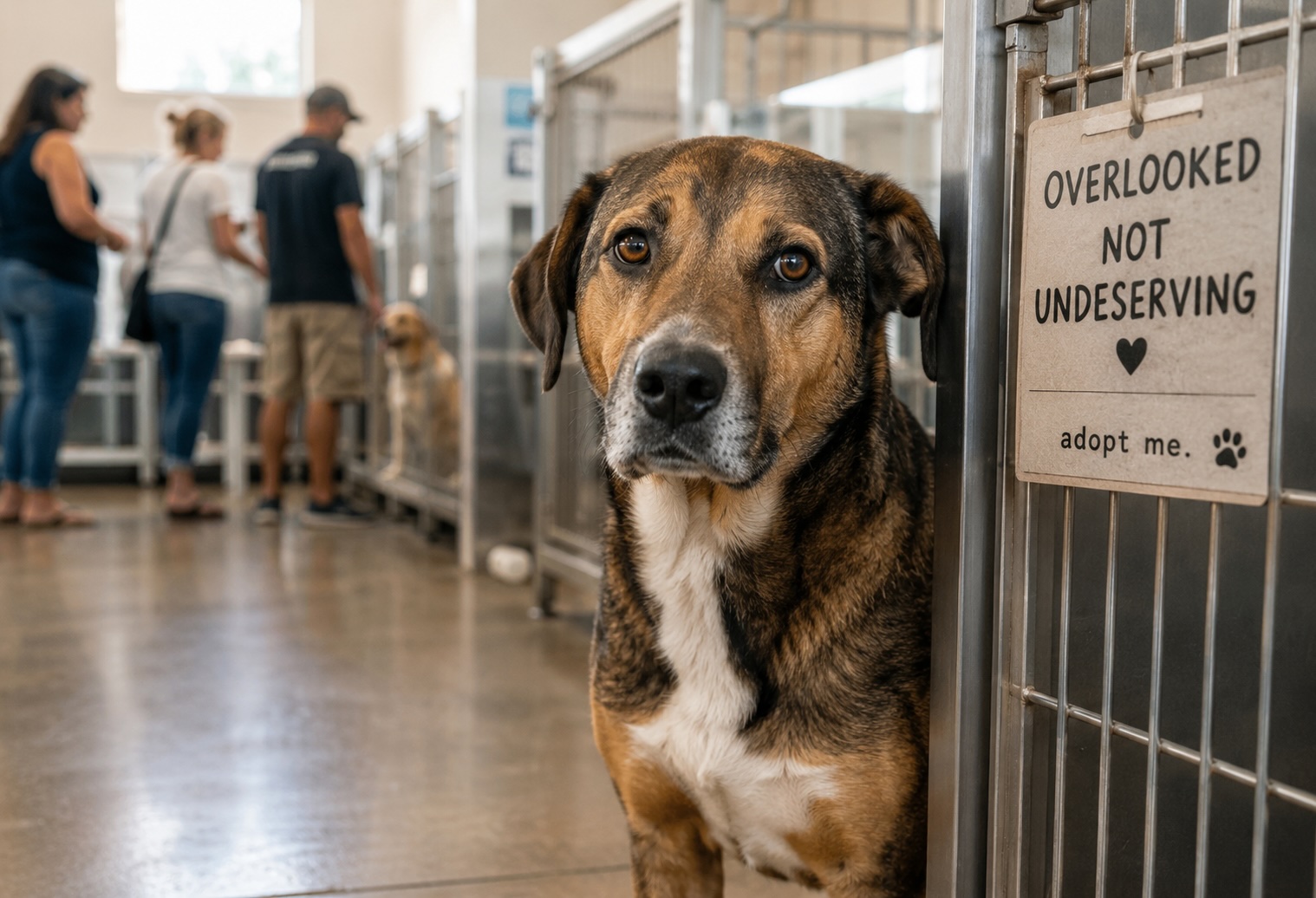
Some dogs sit in shelters longer not because they are bad dogs, but because they carry labels people fear. Large bully-type dogs are the clearest example in many regions, though they are not the only ones. Black dogs, senior dogs, and dogs with medical needs can also be passed over. Add breed restrictions in apartments or insurance policies, and the problem grows. A shelter may know a dog is affectionate, trainable, and social, but if the paperwork says the wrong thing, many homes close before the meet-and-greet ever happens.
This can create a cruel cycle. The longer a dog stays in a shelter, the more stress behavior it may develop. The more stressed it looks, the more people assume the stereotype was right. In truth, the shelter environment itself may be feeding the very behavior that hurts the dog's chances.
How Adopters Can Look Past Bias Without Ignoring Reality
The right way forward is not blind optimism. It is informed observation. Meet the dog more than once if you can. Walk it outside the kennel. Ask whether it has been in foster care and what that home reported. Watch how the dog responds after a surprise, not just during one. Recovery tells you a lot. So does willingness to engage, ability to settle, and comfort with handling.
If you want a therapy dog candidate, look for steadiness, social ease without overexcitement, and a natural ability to remain composed around novelty. If you need a service dog prospect, be even more selective. Not every wonderful dog is suitable for public access work, and that is fine. A dog can be a first-rate companion without being built for a demanding job. Breed bias can make people overlook good candidates, but wishful thinking can also make people force a dog into a role it should never have to carry.
The Value of Honest Shelter Staff
Good shelter staff and foster volunteers are worth their weight in dry firewood. The best ones will tell you the truth, not just the sales pitch. They will explain what they know, what they do not know, and where the dog may need support. Listen closely to those people. A fair assessment rooted in behavior is far more valuable than a breed guess dressed up as certainty.
The Bigger Truth About Good Dogs
Out in the field, a dog proves itself by what it does, not by what folks say at the truck. Shelter dogs deserve that same fairness. Some will not fit every home. That is reality. Some will need training, structure, and patient handling. That is reality too. But many are judged too quickly because of appearance, labels, and old fears passed around like campfire tales.
The myth is that breed tells you everything. The reality is that dogs are shaped by a far more complicated mix of breeding, experience, environment, and human stewardship. If you are searching for a companion, therapy dog, or service dog prospect, do not let stereotypes do your thinking for you. Look harder. Ask better questions. Trust what careful evaluation reveals over what panic and prejudice insist must be true.
A dog is not a headline. Not a rumor. Not a silhouette on a kennel card. Sometimes the one everybody walks past is the very one that would have watched your door, steadied your nerves, warmed your feet, and followed you faithful as dawn. That is why breed bias in shelters deserves honest scrutiny. When we trade myth for reality, more good dogs get the fair shake they have earned.
For anyone looking for a companion dog, a therapy prospect, or even a service dog candidate, this topic matters more than most realize. Shelter dogs are not just names on kennel cards. They are living animals carrying genetics, yes, but also carrying history, stress, training gaps, resilience, and often a strong desire to bond with the right person. If we are going to talk honestly about breed bias in shelters, we need to separate myth from reality and keep both feet planted in the dirt while we do it.
What Breed Bias Really Means
Breed bias in shelters is the tendency to judge a dog's behavior, adoptability, or safety based mostly on suspected breed rather than the dog in front of you. Sometimes that bias comes from shelter staff trying to protect the public. Sometimes it comes from adopters carrying fear from news stories or neighborhood gossip. And sometimes it comes from housing rules and insurance restrictions that make certain labels feel like a dead end before the dog even steps out of the kennel.
The hard truth is that many shelter dogs are mixed breeds, and visual breed identification is often shaky ground. A dog labeled as a pit bull mix may have several breeds in its background. A blocky-headed dog may not be what people assume at all. Yet once that label gets stuck on the card, it can follow the dog like a burr on a hunting vest. Adopters see the label first and the dog second. That is where myth starts doing real damage.
The Problem With Labels
In my experience, labels can be useful only to a point. If I am looking at a bird dog, I know what certain lines may be inclined to do in the field. If I am looking at a guardian breed, I expect a different kind of watchfulness. But inclination is not destiny. In shelters, labels are often guesses made under pressure, with limited history and little more than a quick look to go on. That guess can influence handling decisions, marketing, foster opportunities, and adoption rates.
A frightened dog in a noisy kennel may bark, lunge, spin, or shut down. People often read that behavior through the lens of breed stereotypes. A nervous small dog may be called cute but anxious. A large muscular dog showing the same stress may be called dangerous. The behavior may come from fear in both cases, but bias changes the story people tell themselves.
The Myth: Breed Alone Predicts Behavior
This is probably the biggest myth in the whole conversation. Breed can influence tendencies. That much is fair. Retrievers often like to carry things. Hounds often follow scent. Herding breeds may be quick to control movement. But behavior is built from more than a breed label. Early socialization, training, health, environment, frustration, handling, trauma, and plain individual temperament all weigh heavily.
I have seen soft-hearted dogs from tough-looking breeds lean into a child's hand like they had waited all their lives for kindness. I have also seen dogs from popular family breeds struggle badly because nobody set boundaries, taught them how to settle, or respected their needs. The point is not to deny breed traits. The point is to stop pretending breed is the whole map.
For people seeking a therapy dog or service dog prospect, this matters deeply. Those roles demand stability, confidence, trainability, recovery from stress, and a sound body. A dog's individual temperament matters far more than whether somebody assumes the dog fits a stereotype. Some breeds may statistically produce more candidates for certain jobs, but a shelter dog should be evaluated as an individual, not dismissed by rumor.
The Reality: Breed Traits Can Matter, But Context Matters More
Now let us be straight about it. Saying breed bias is harmful does not mean every breed is the same. That is not honest either. Dogs were developed for different kinds of work, and many still carry those instincts. A terrier may have more grab and grit than a toy breed. A livestock guardian may be more independent than a dog bred to work in close partnership with people. Ignoring those realities helps no one.
But shelters are full of mixed genetics, incomplete histories, and dogs under stress. What you are often seeing is not the dog's true settled character but the dog's kennel survival strategy. Some become loud. Some become frozen. Some become clowns. Some become hard to read. A good shelter or rescue tries to look beyond that through repeated observations, foster reports, careful introductions, and structured behavior assessments. That gives a clearer picture than breed assumption ever will.
Stress Changes Dogs
I have walked into kennels where the sound hits you like a slammed tailgate. Metal rattles, dogs bark off each other, and the air is thick with tension. In a place like that, even a good dog can come apart at the seams. Appetite changes. Sleep suffers. Reactivity climbs. A dog that paces and barks behind a kennel door may turn out to be calm and biddable in a home. Another dog that appears quiet in the shelter may open up into a whirlwind once it feels safe enough to show its full personality.
That is why responsible adoption is about more than falling for a face or fleeing from a label. It is about asking better questions. How does the dog recover after excitement? How does it handle touch, noise, and new settings? Can it focus on a person? Does it show resilience? For a companion dog, these traits affect day-to-day life. For therapy and service work, they are foundational.
Why Certain Dogs Stay Longer in Shelters
Some dogs sit in shelters longer not because they are bad dogs, but because they carry labels people fear. Large bully-type dogs are the clearest example in many regions, though they are not the only ones. Black dogs, senior dogs, and dogs with medical needs can also be passed over. Add breed restrictions in apartments or insurance policies, and the problem grows. A shelter may know a dog is affectionate, trainable, and social, but if the paperwork says the wrong thing, many homes close before the meet-and-greet ever happens.
This can create a cruel cycle. The longer a dog stays in a shelter, the more stress behavior it may develop. The more stressed it looks, the more people assume the stereotype was right. In truth, the shelter environment itself may be feeding the very behavior that hurts the dog's chances.
How Adopters Can Look Past Bias Without Ignoring Reality
The right way forward is not blind optimism. It is informed observation. Meet the dog more than once if you can. Walk it outside the kennel. Ask whether it has been in foster care and what that home reported. Watch how the dog responds after a surprise, not just during one. Recovery tells you a lot. So does willingness to engage, ability to settle, and comfort with handling.
If you want a therapy dog candidate, look for steadiness, social ease without overexcitement, and a natural ability to remain composed around novelty. If you need a service dog prospect, be even more selective. Not every wonderful dog is suitable for public access work, and that is fine. A dog can be a first-rate companion without being built for a demanding job. Breed bias can make people overlook good candidates, but wishful thinking can also make people force a dog into a role it should never have to carry.
The Value of Honest Shelter Staff
Good shelter staff and foster volunteers are worth their weight in dry firewood. The best ones will tell you the truth, not just the sales pitch. They will explain what they know, what they do not know, and where the dog may need support. Listen closely to those people. A fair assessment rooted in behavior is far more valuable than a breed guess dressed up as certainty.
The Bigger Truth About Good Dogs
Out in the field, a dog proves itself by what it does, not by what folks say at the truck. Shelter dogs deserve that same fairness. Some will not fit every home. That is reality. Some will need training, structure, and patient handling. That is reality too. But many are judged too quickly because of appearance, labels, and old fears passed around like campfire tales.
The myth is that breed tells you everything. The reality is that dogs are shaped by a far more complicated mix of breeding, experience, environment, and human stewardship. If you are searching for a companion, therapy dog, or service dog prospect, do not let stereotypes do your thinking for you. Look harder. Ask better questions. Trust what careful evaluation reveals over what panic and prejudice insist must be true.
A dog is not a headline. Not a rumor. Not a silhouette on a kennel card. Sometimes the one everybody walks past is the very one that would have watched your door, steadied your nerves, warmed your feet, and followed you faithful as dawn. That is why breed bias in shelters deserves honest scrutiny. When we trade myth for reality, more good dogs get the fair shake they have earned.


View all 0 comments